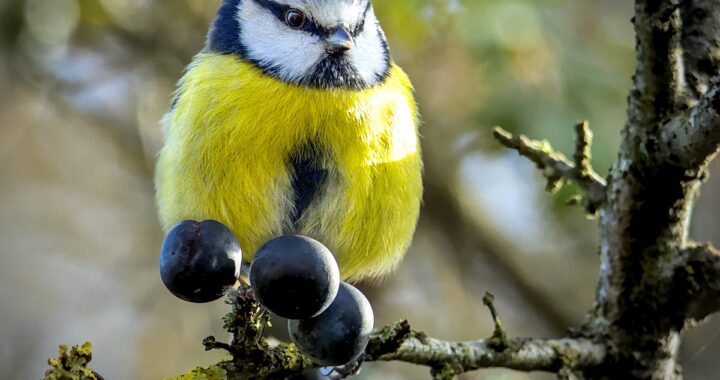

Had another pleasant visit to Phyllis Currie today. The day started out a bit damp and dull, but brightened up in the late afternoon so I stopped in after work. There seemed to be a bit more life around today after a very cold snap for May. Still no sign of the herd of fallow deer, but I heard the muntjacs calling.
Highlights of the day: I saw and photographed my first chiffchaff. It was getting darker so not the sharpest shot, but I’m happy with it!
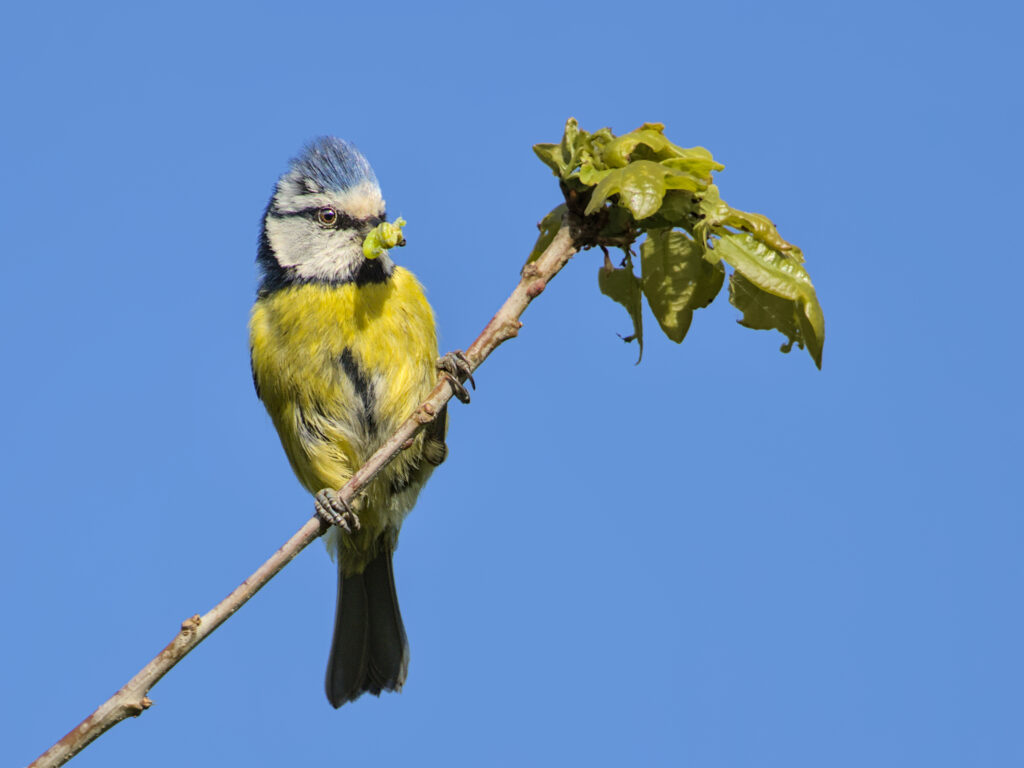
Also saw a lovely blue tit with a green caterpillar in its beak, which was presumably calling to its young. I never saw the fledglings come though, so maybe it just ate it itself! Nice photos to add to my Blue Tit Photography collection. And another blue tit fly out of its bird box.
I also spotted a hoverfly on hoary plantain, which came out nice even in the windy conditions – to be added to the Bugs on Grasses photos.
We also have a close up of a common carder bee / bumblebee, which was enjoying the afternoon sunshine, and finally, a beetle on a buttercup.
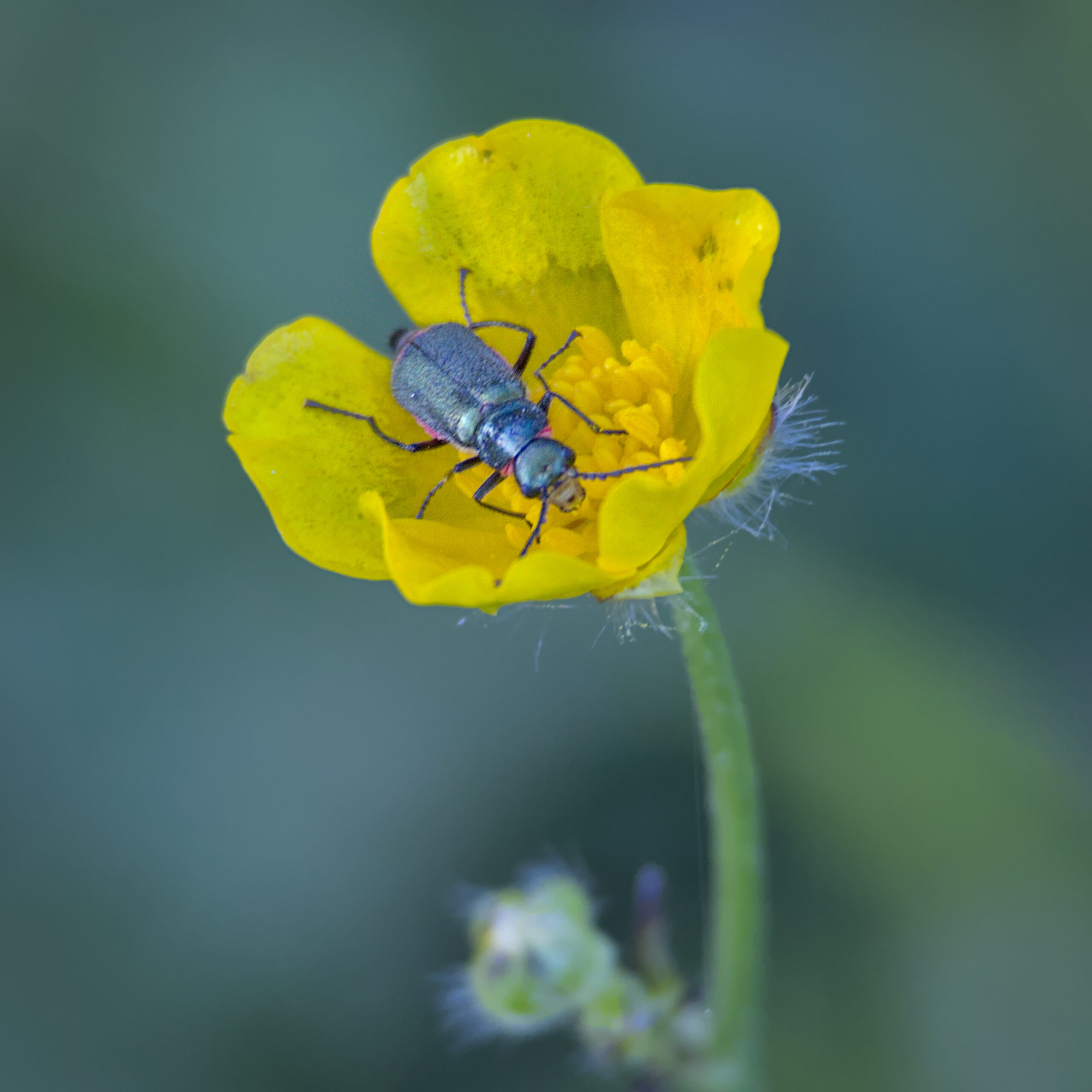
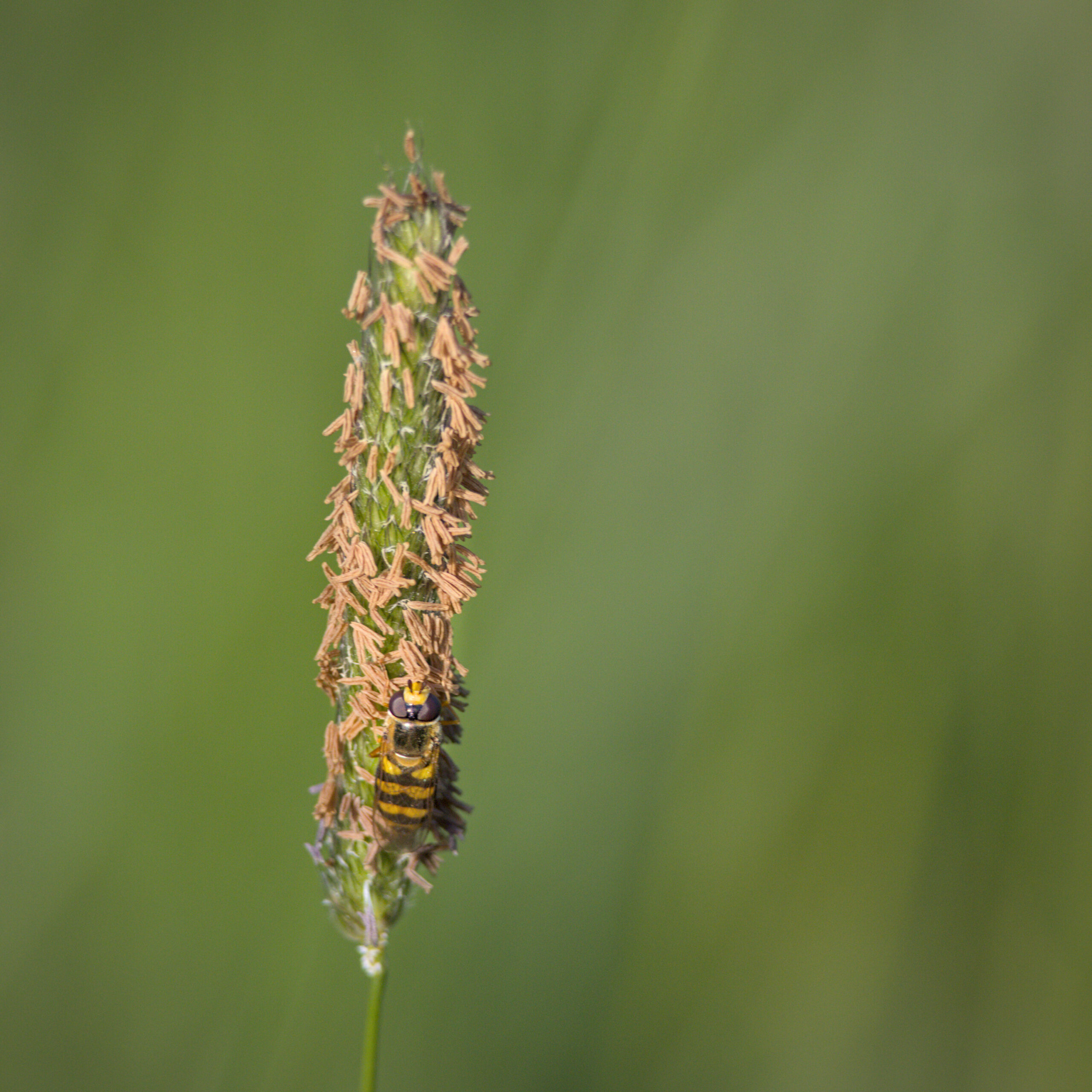
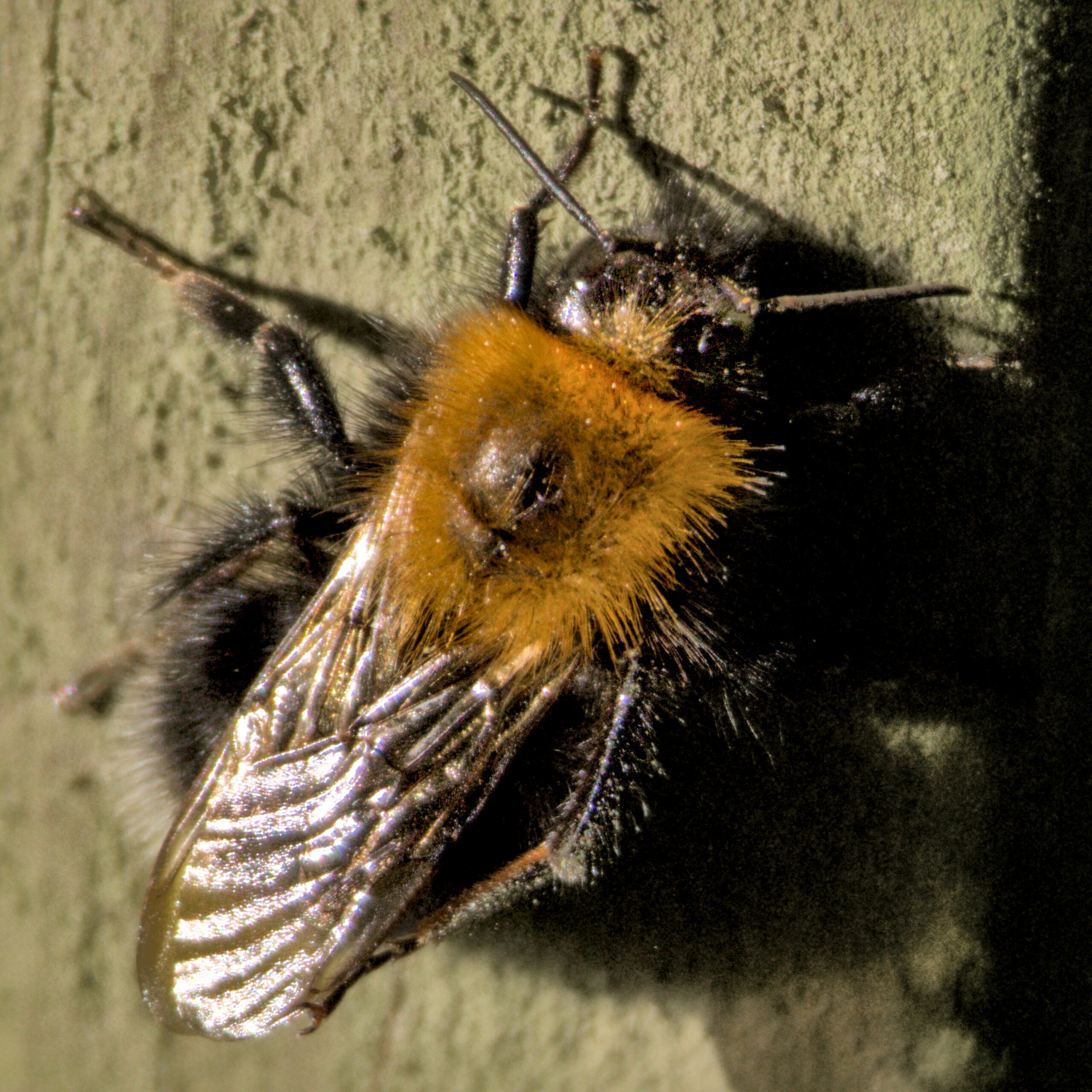
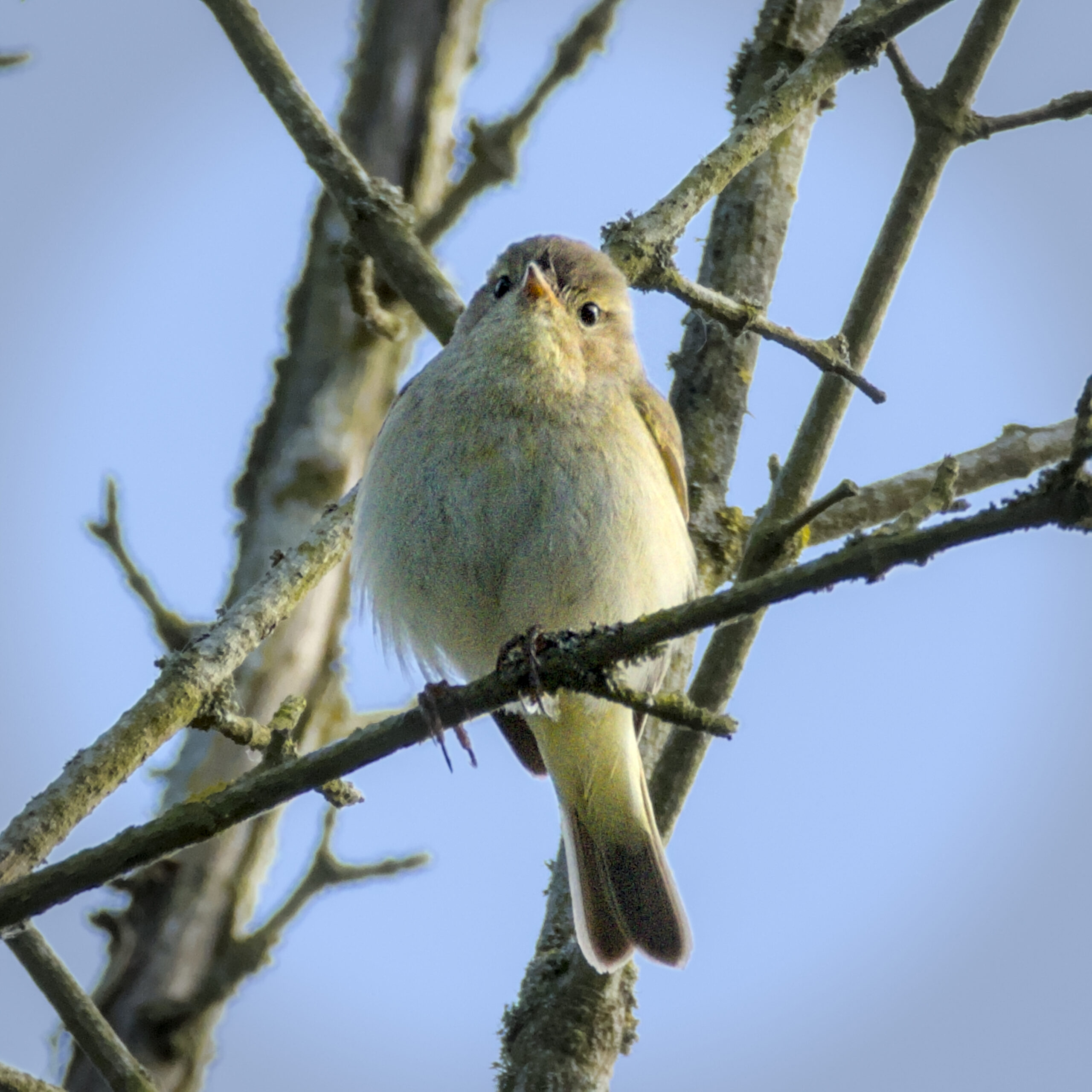
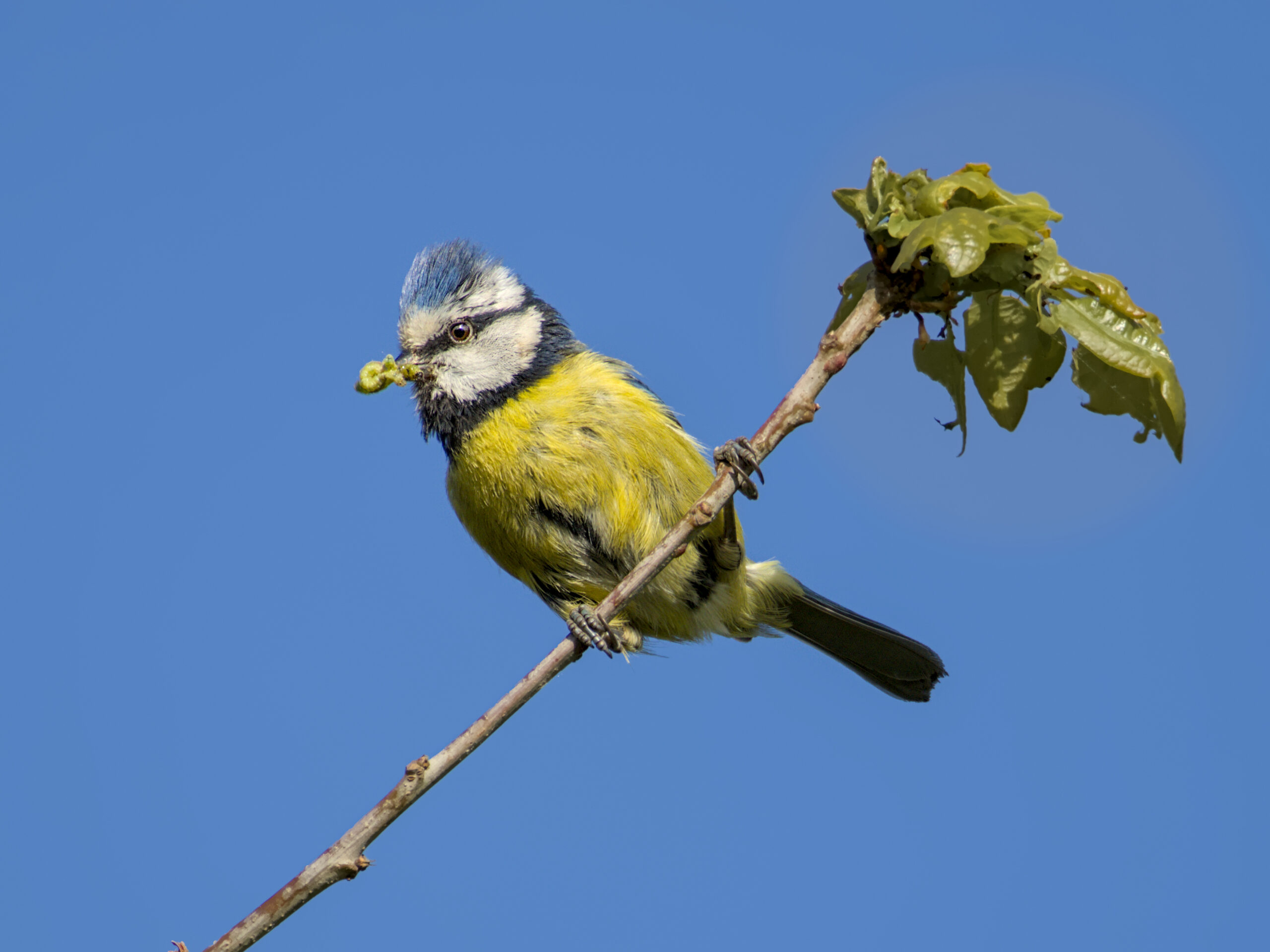
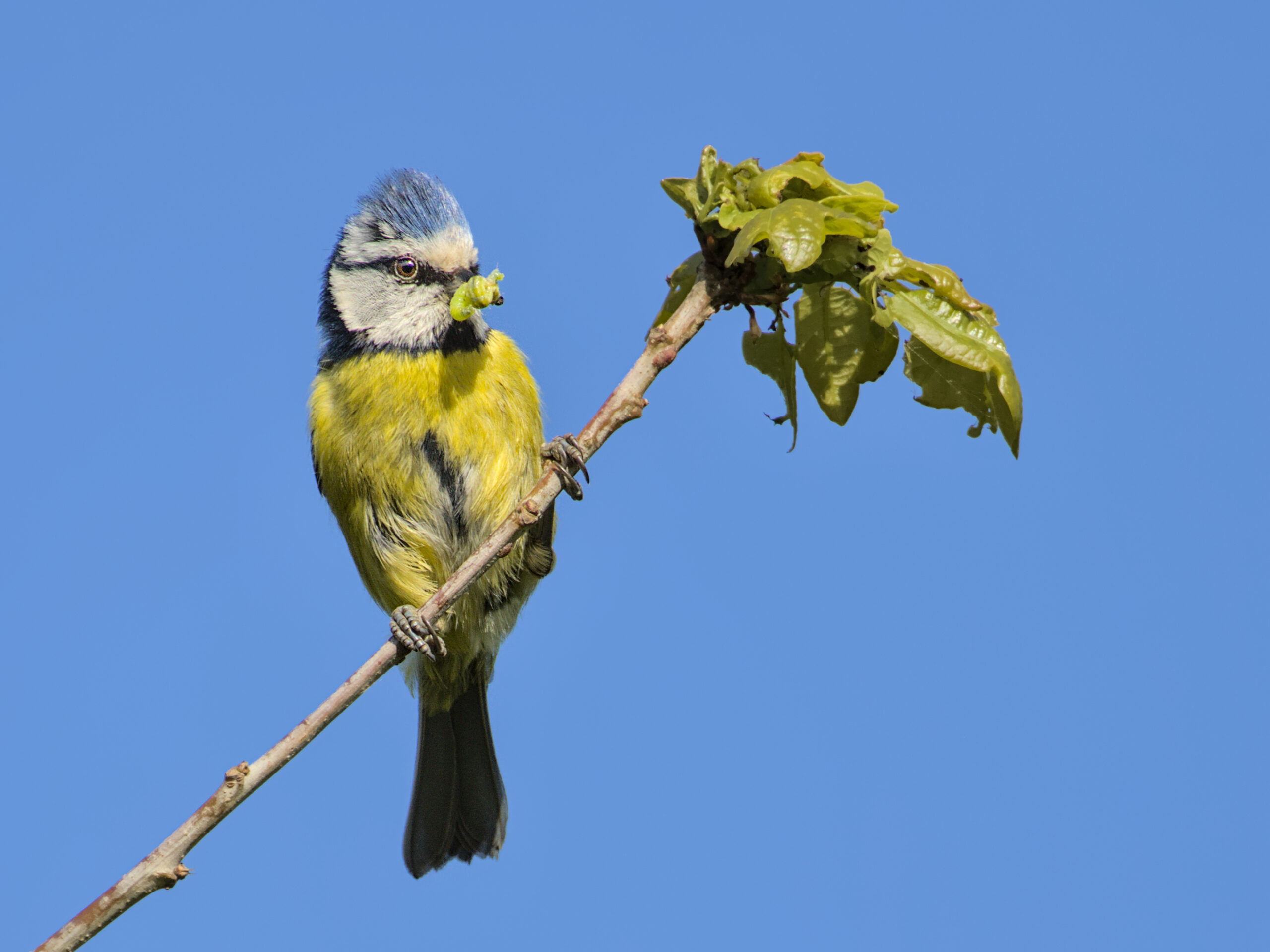
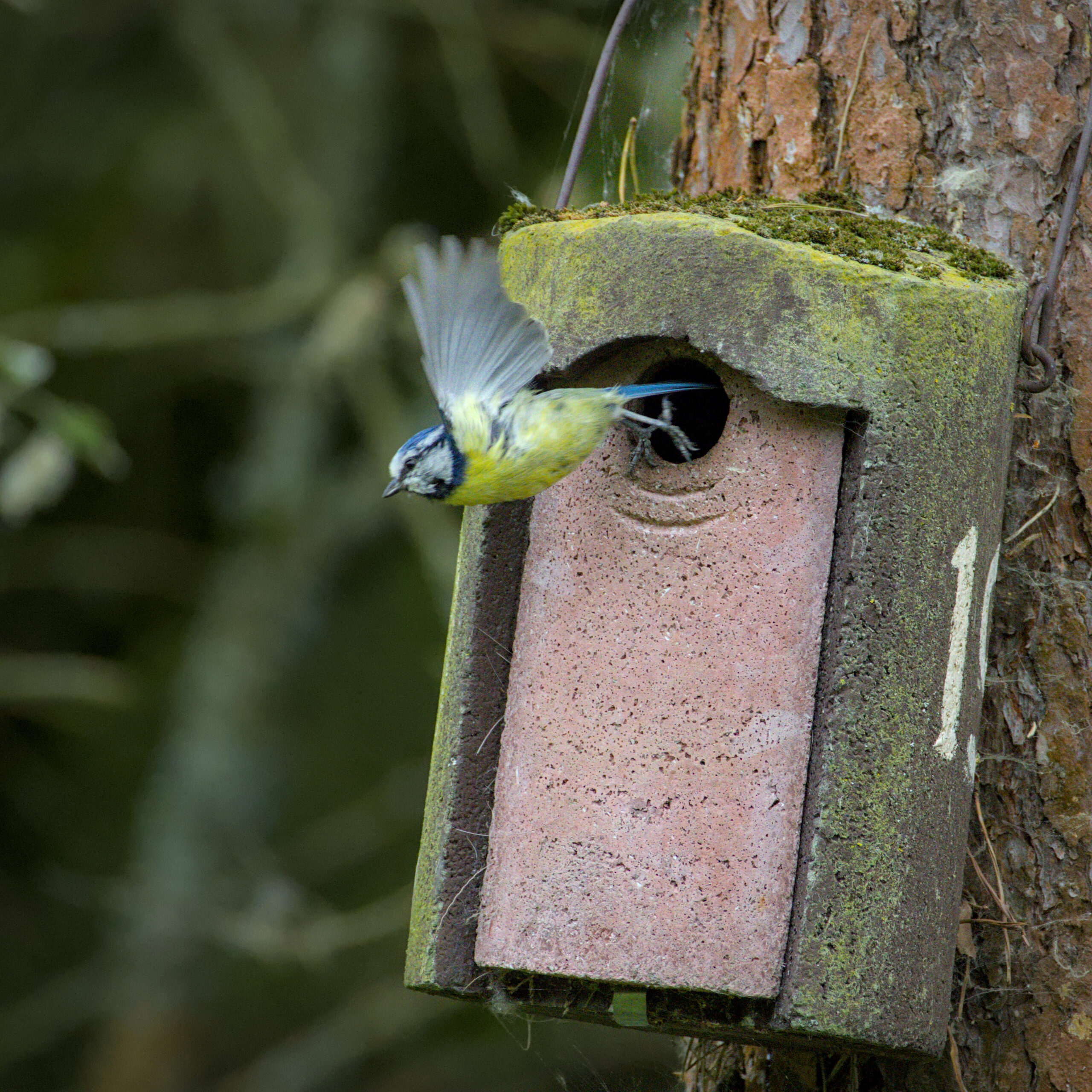
Image 1 — Beetle on Buttercup, Phyllis Currie
Possibly a Swollen-thighed Beetle — Oedemera nobilis (provisional ID — see note)
A small metallic beetle on what appears to be a Meadow Buttercup (Ranunculus acris) — one of the commonest wildflowers in British grassland, flowering May to July. The iridescent blue-green sheen and elongated body are consistent with Oedemera nobilis, a flower beetle commonly found on open grassland and meadow flowers. Males of this species have distinctively swollen hind femora — the “swollen thighs” that give it its name — though the angle here makes that difficult to confirm.
- Scientific name: Oedemera nobilis (provisional)
- Common name: Swollen-thighed Beetle / False Oil Beetle
- Season: May–August
- Habitat: Meadows, grassland, hedgerow margins — wherever open flowers are abundant
- UK Status: Common in southern England
- ⚠️ ID Note: I’m not confident on this one — the metallic colouration is distinctive but several small flower beetles look similar. If you can improve on this ID please leave a comment!
Image 2 — Hoverfly on Hoary Plantain, Phyllis Currie
Marmalade Hoverfly — Episyrphus balteatus (provisional ID — see note)
A familiar sight in any British meadow from spring through autumn — the Marmalade Hoverfly is one of our most abundant and widespread hoverfly species. The yellow and black banded abdomen is characteristic, though the small size and the angle make a confident ID tricky. The grass spike is Hoary Plantain (Plantago media) — a lovely indicator of unimproved grassland and a reliable source of pollen for small insects. Regular visitors to the Bugs on Grasses gallery will recognise both.
- Scientific name: Episyrphus balteatus (provisional)
- Common name: Marmalade Hoverfly
- Season: March–November
- Habitat: Almost everywhere — meadows, gardens, hedgerows
- UK Status: Very common; also a significant autumn migrant
- ⚠️ ID Note: Provisional — hoverfly ID to species level can be tricky at this angle. Comments welcome!
Image 3 — Common Carder Bee on Wall, Phyllis Currie
Common Carder Bee — Bombus pascuorum (provisional ID — see note)
A close-up portrait of a bumblebee resting on a rough concrete or stone wall — the warm tawny-orange thorax and dark abdomen are consistent with Bombus pascuorum, one of Britain’s most widespread and long-seasoned bumblebees. The iridescent wing venation visible here is a reminder of how extraordinary these insects look up close. Common Carders are ground-nesters, using old mouse burrows or tussocky grass — quite different from the cavity-nesting blue tits just a few metres away.
- Scientific name: Bombus pascuorum (provisional)
- Common name: Common Carder Bee
- Season: March–October
- Habitat: Gardens, meadows, hedgerows — highly adaptable
- UK Status: Common and widespread
- ⚠️ ID Note: Provisional — bumblebee ID from this angle is not straightforward. Corrections welcome!
Image 4 — Chiffchaff, Phyllis Currie
Common Chiffchaff — Phylloscopus collybita
One of the first migrants to arrive in spring and one of the last to leave, the Chiffchaff is the sound of the season turning — that persistent, two-note song carrying through bare woodland from March onwards. This individual is perched in a lichen-covered tree, looking directly into the lens with the slightly affronted expression these small warblers tend to adopt. The olive-brown plumage, pale supercilium and rounded body shape are all characteristic. Separating Chiffchaff from Willow Warbler in the field can be genuinely tricky — the leg colour (dark in Chiffchaff, paler in Willow Warbler) and the song are the most reliable guides.
- Scientific name: Phylloscopus collybita
- Common name: Common Chiffchaff
- Season: Arrives February–March; most depart by October; small numbers overwinter
- Habitat: Woodland, scrub, hedgerows with tall trees — anywhere with insect-rich vegetation
- UK Status: Very common summer visitor; Green List
- Song: The repetitive “chiff-chaff-chiff-chaff” is one of the most recognisable sounds of the British spring
Images 5 & 6 — Blue Tit with Caterpillar, Phyllis Currie
Blue Tit — Cyanistes caeruleus
Two shots of the same bird — a blue tit pausing on a bare branch against an almost perfectly clear blue sky, a green caterpillar firmly in its bill. It’s May, which means somewhere nearby there’s a nest box full of hungry chicks, and this bird is working flat out to keep them fed. A blue tit brood at peak demand can consume hundreds of caterpillars a day, which is why the timing of egg-laying is so precisely synchronised with the spring flush of leaf-eating moth larvae. The clean blue sky background gives both shots a quality that’s hard to manufacture — sometimes the light just works.
- Scientific name: Cyanistes caeruleus
- Common name: Blue Tit
- Season: Year-round resident; nesting April–June
- Diet during breeding: Almost exclusively caterpillars, particularly moth larvae — oak trees are the most productive hunting ground
- Clutch size: 8–12 eggs; both parents feed the chicks making hundreds of food runs per day at peak demand
- UK Status: Very common; Green List
Image 7 — Blue Tit Exiting Nest Box, Phyllis Currie
Blue Tit — Cyanistes caeruleus
Almost certainly the same bird as in the caterpillar shots — caught mid-exit from nest box number 1, wings spread and tail fanned, the blur of motion giving a real sense of the speed and urgency of a parent on feeding duty. The moss-covered woodcrete box is a Schwegler or similar — a type well-suited to blue tits, with an entrance hole of around 28–32mm. The number on the box suggests Phyllis Currie’s nest boxes are monitored, which means this pair’s breeding success may well be contributing to local wildlife records. A good reason to let them get on with it and not linger too long near the box.
- Scientific name: Cyanistes caeruleus
- Common name: Blue Tit
- Nest boxes: Blue tits readily adopt nest boxes and are one of the most frequently monitored species in the BTO’s Nest Record Scheme
- Fledging: Chicks fledge at around 18–21 days; both parents continue to feed fledglings for several weeks after leaving the box
- UK Status: Very common; Green List
- Note: If you have a garden, a 28–32mm entrance hole nest box in a shaded spot will almost always attract blue tits within a season or two