
Photographing deer is very tricky, at least, real wild deer. I often see deer in Phyllis Currie nature reserve – there are some resident muntjac, and some fallow deer often pass through and spend some time there. Weald Country Park is a better place to see fallow deer as they can usually be see in clearings soaking up the sun. I also enjoy a trip to Bushy Park to see red deer – although I do consider this cheating really, as the deer are not at all skittish and there’s little challenge.
Each of these locations provides quite a different experience – Phyllis Currie is about the solitude, silence and being at one with nature; Weald Park is more about stalking and avoiding dog walkers, and Bushy is for great parkland shots, deer bathing in water and watching the herd’s social interactions and family life.
Part of the fun of photographing deer in the wild is the hunt – stalking them, and then trying to take a photo before they move. There’s usually a few seconds between them looking at me and thinking “is that a predator?” before charging off. And it only takes one deer to run, and the whole herd scarpers.
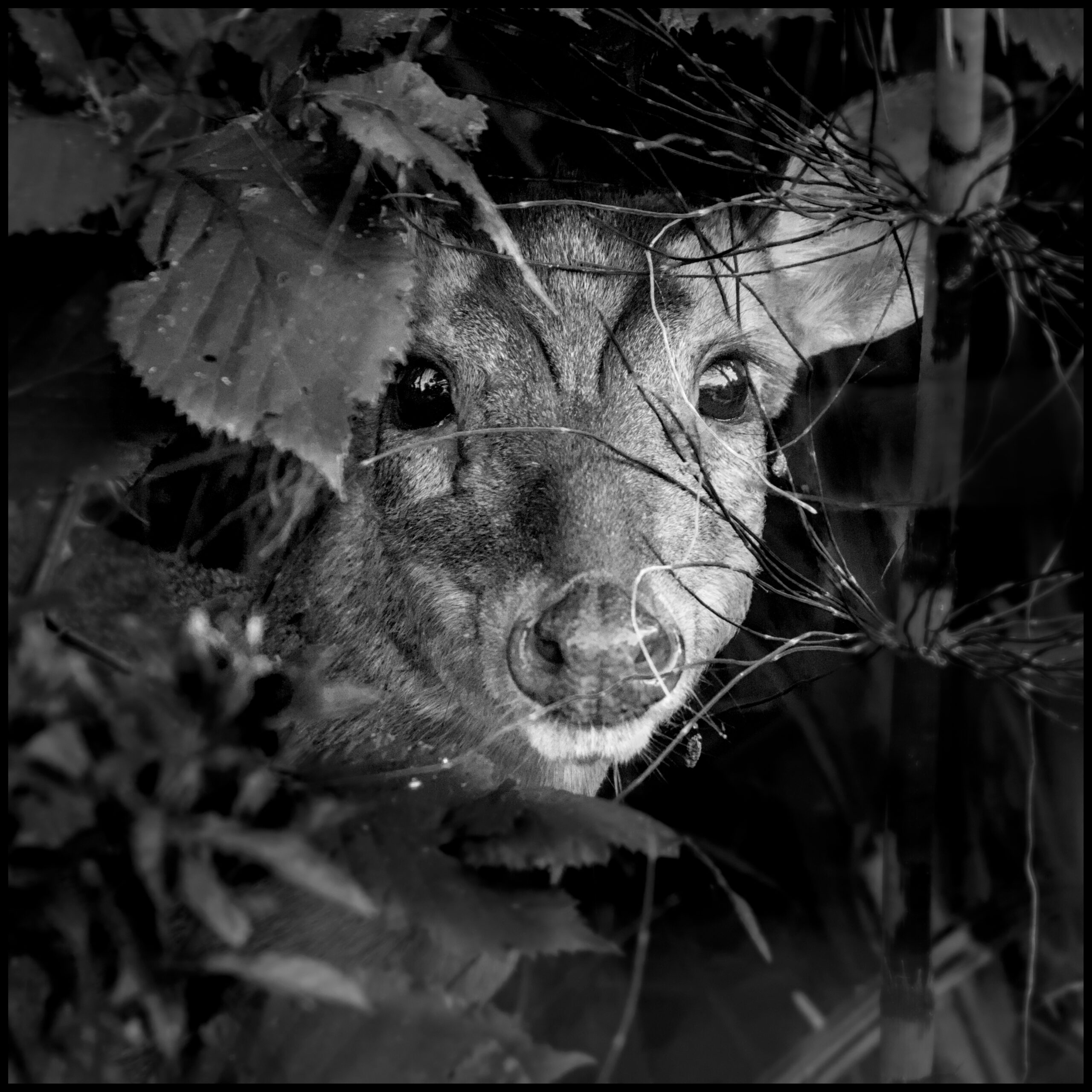
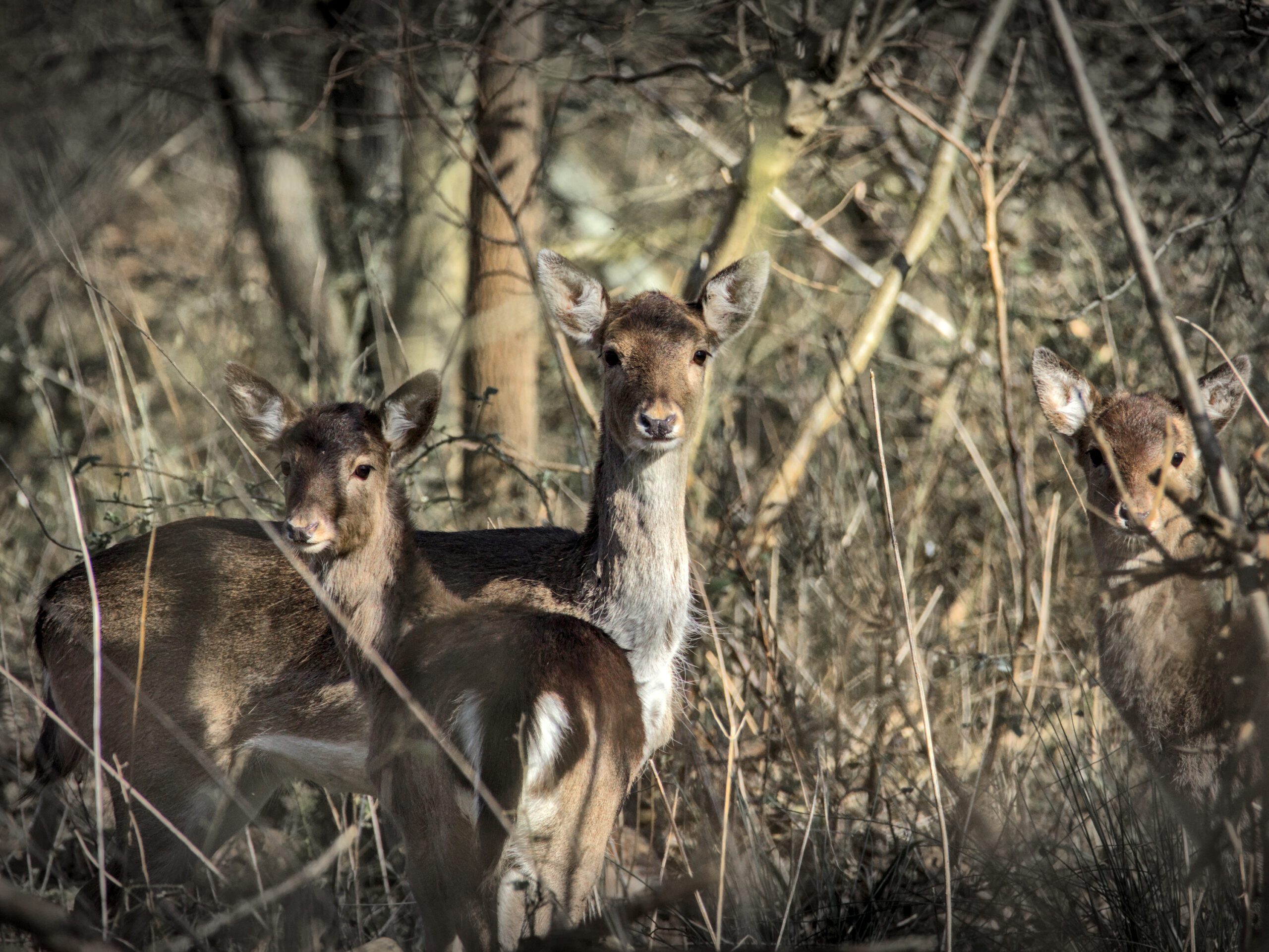
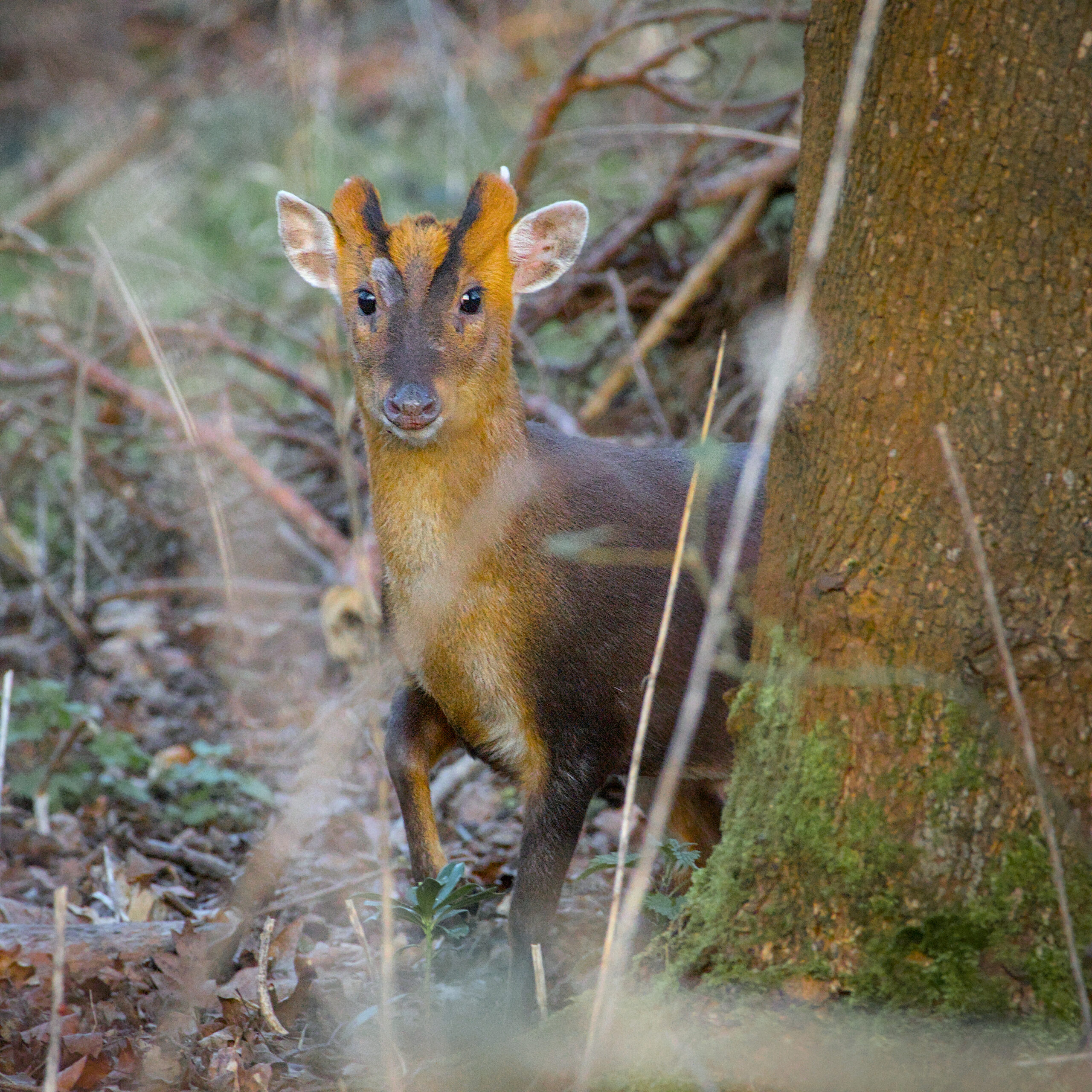
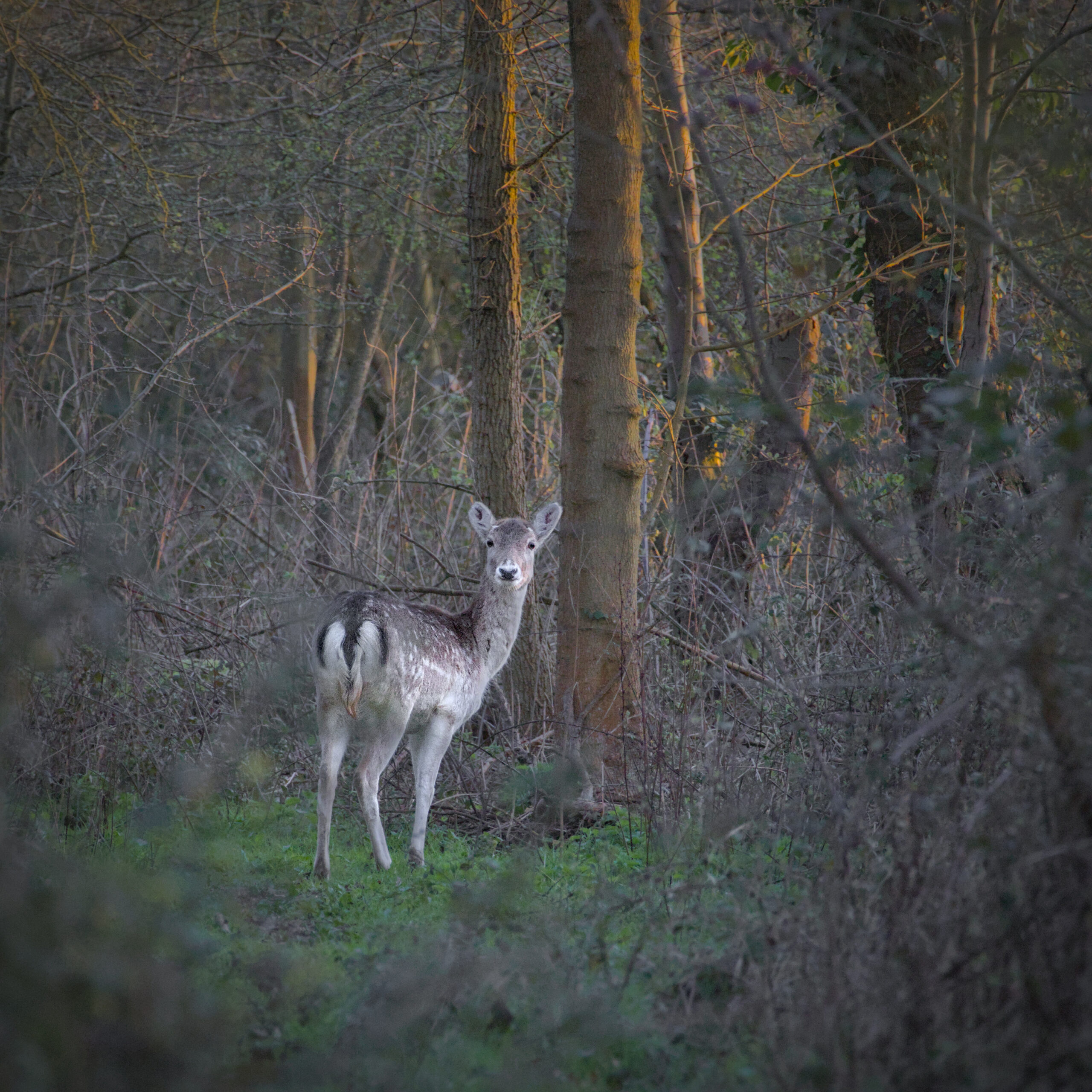
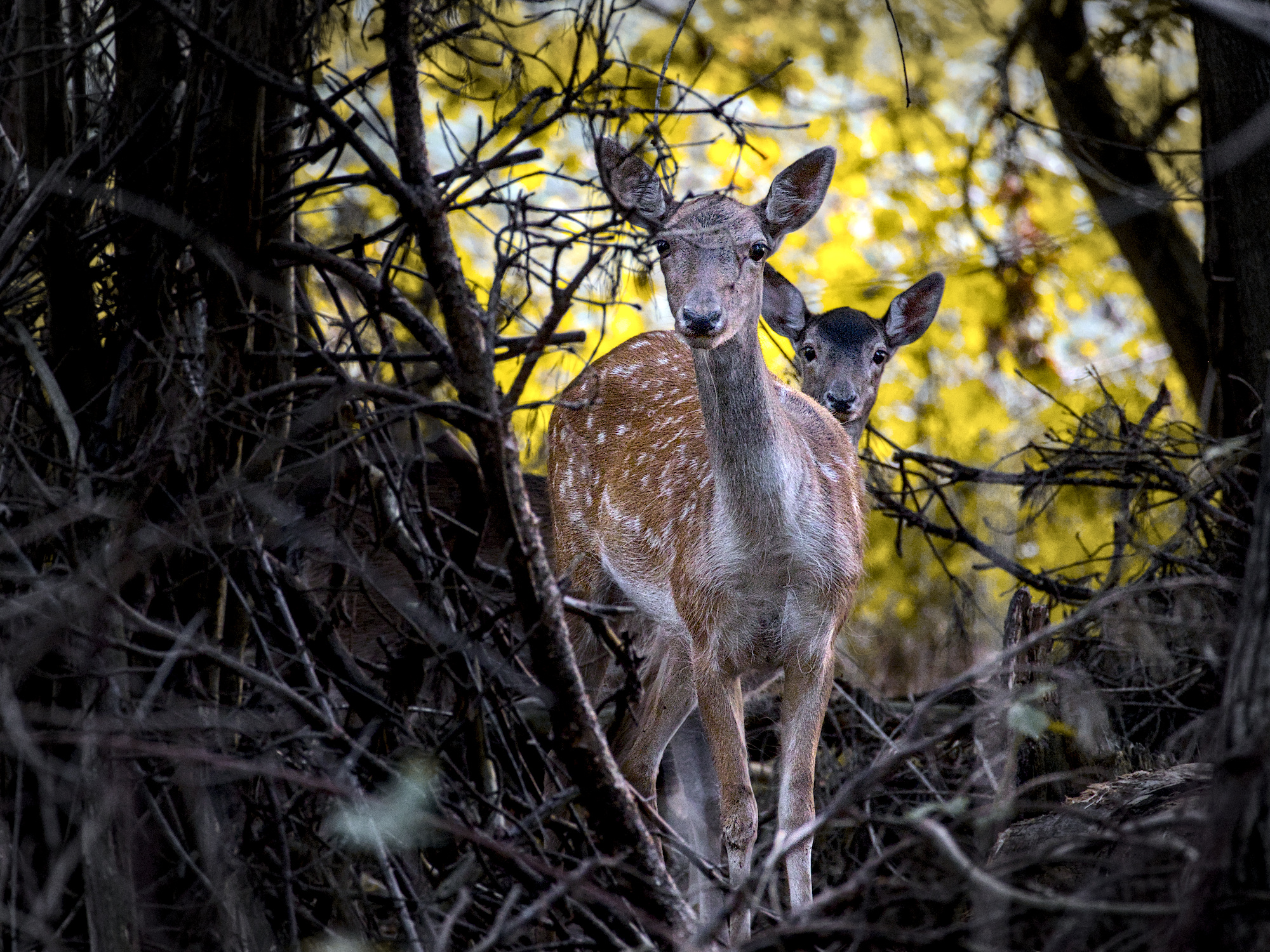
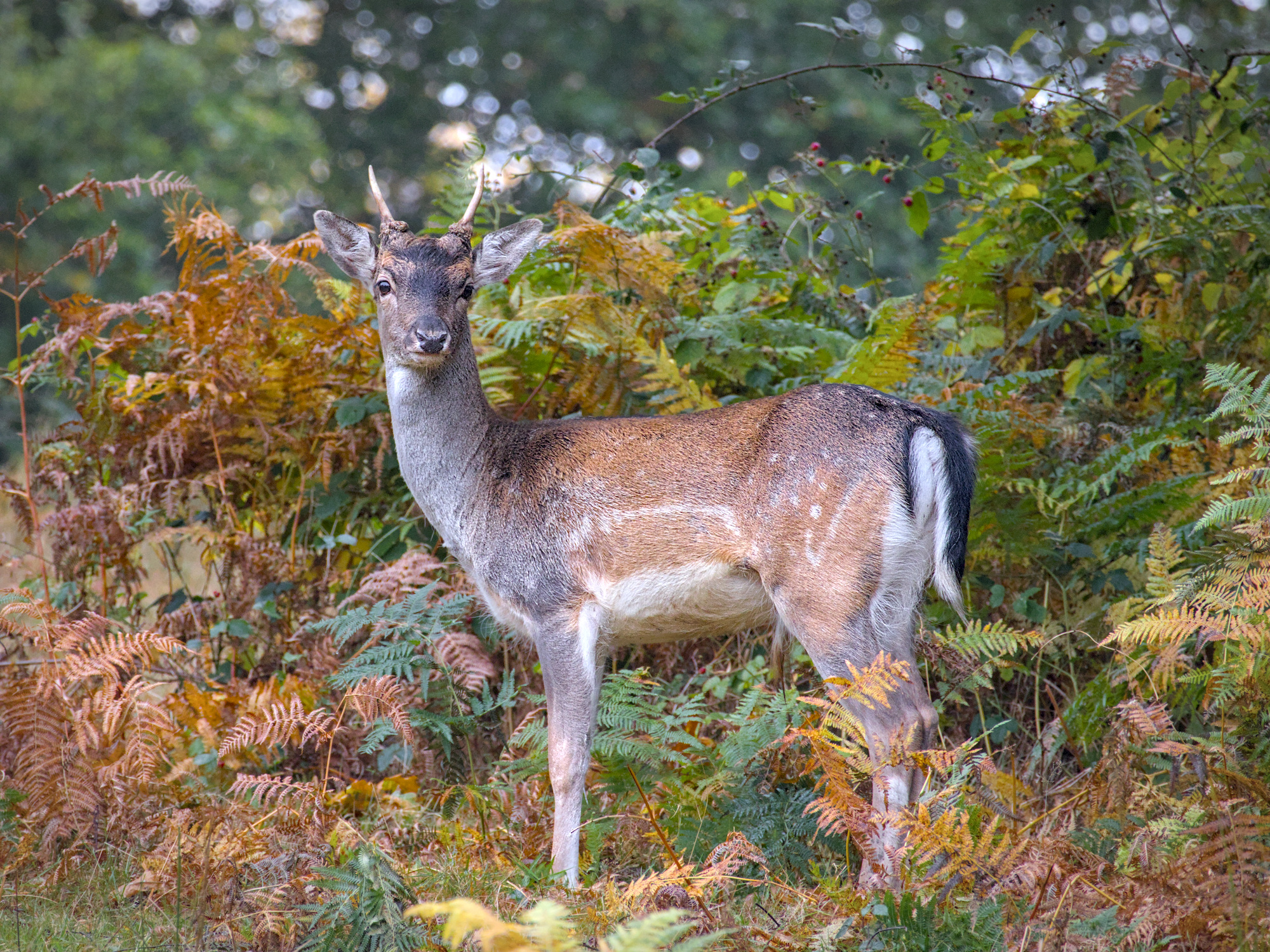
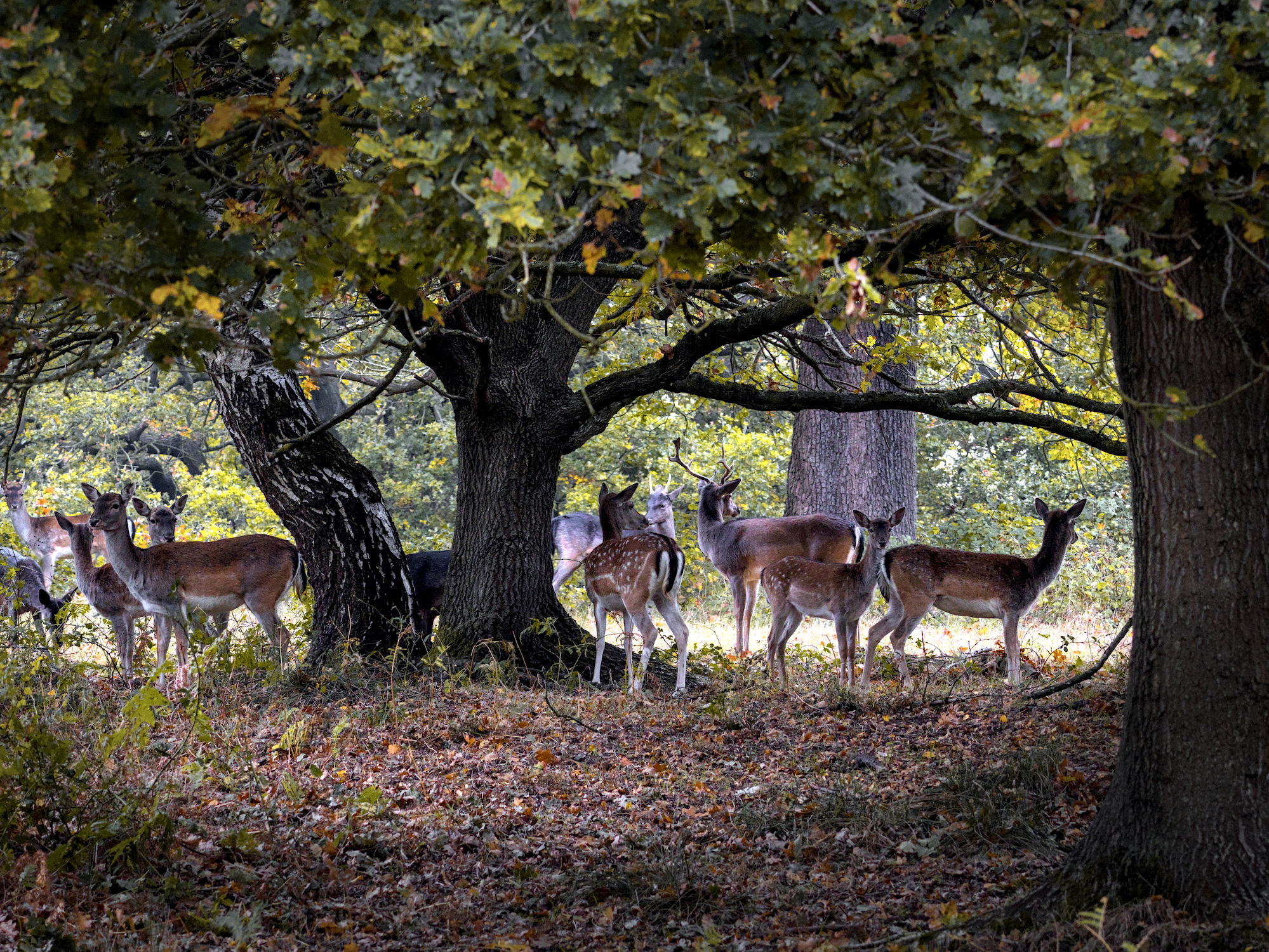
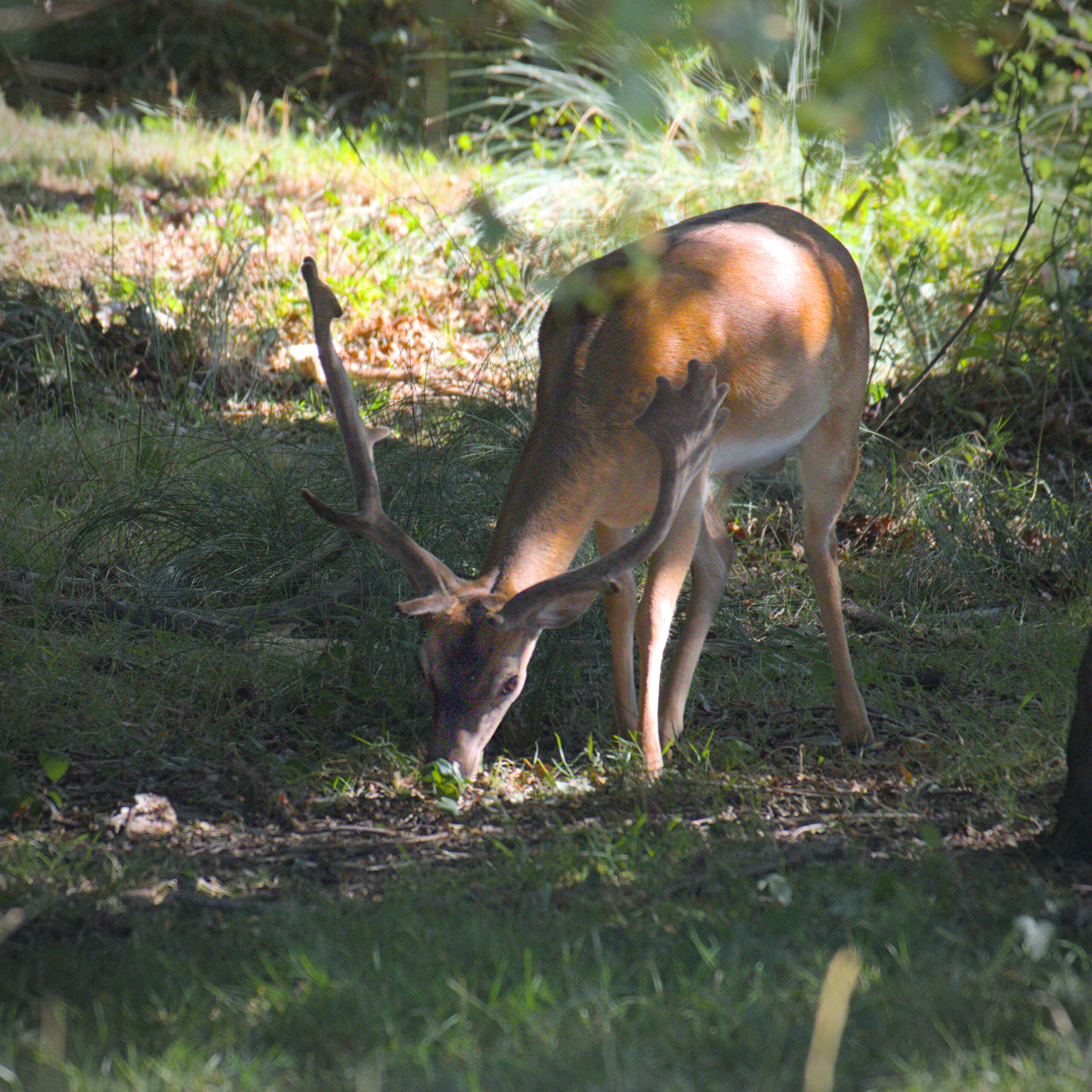
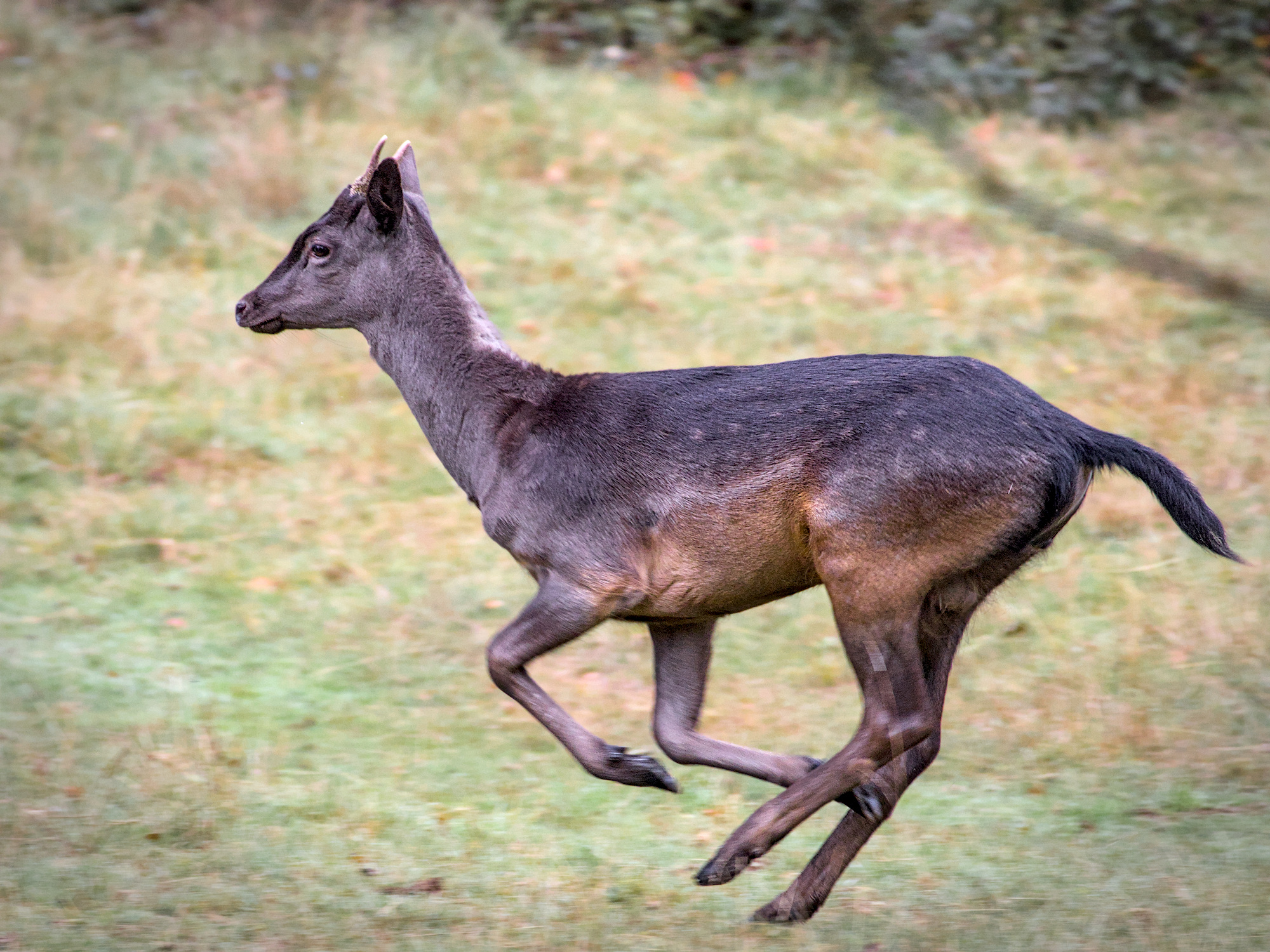
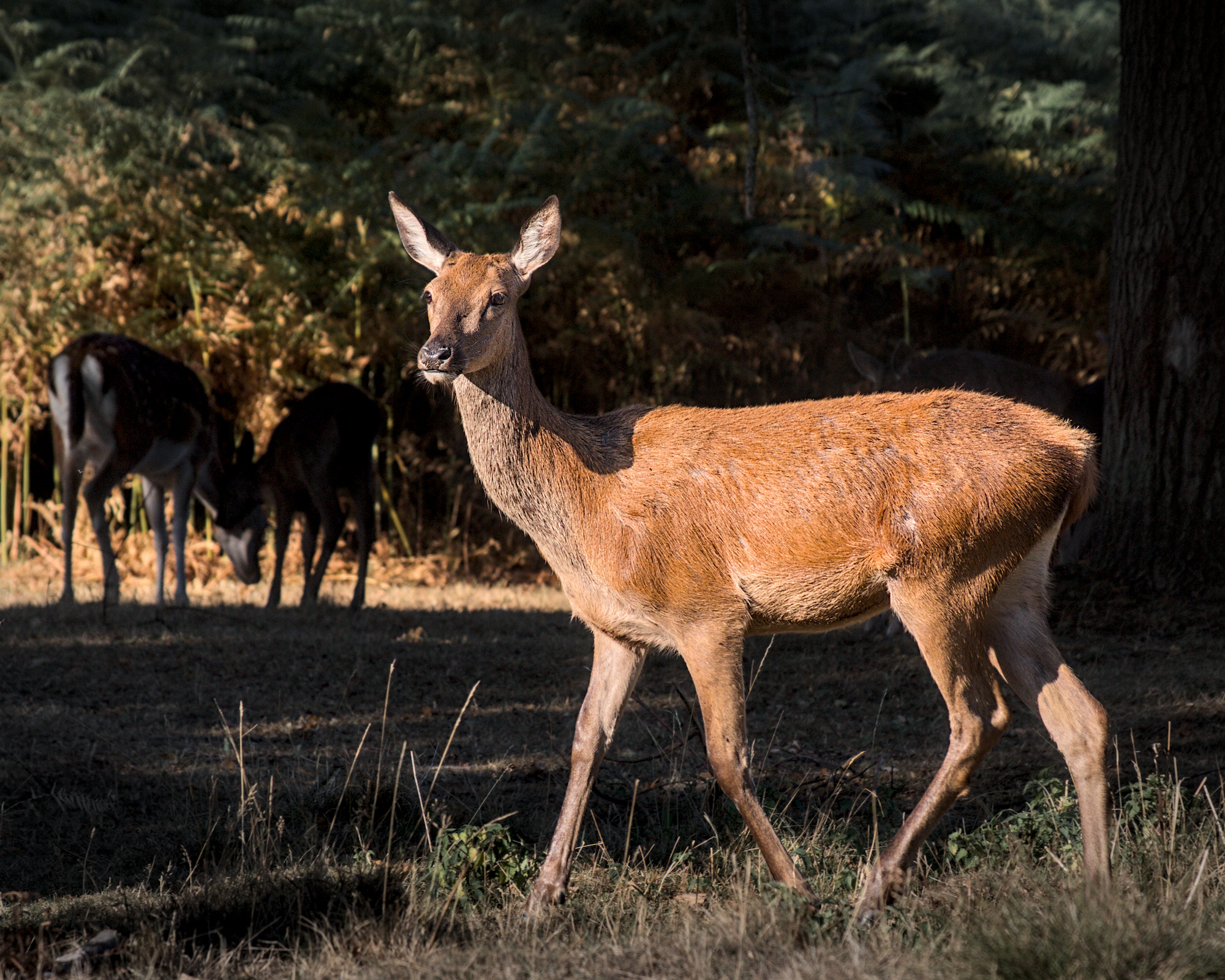
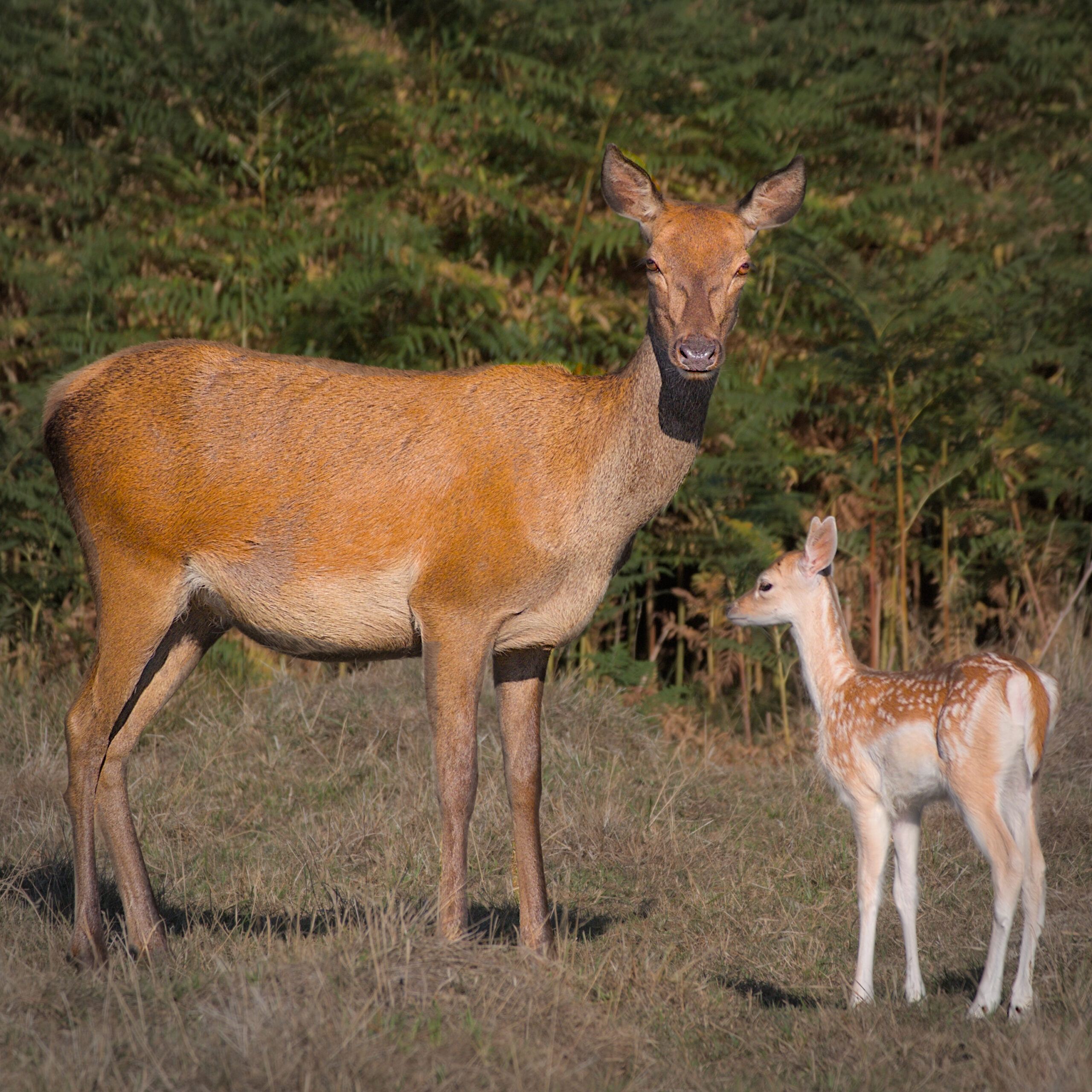
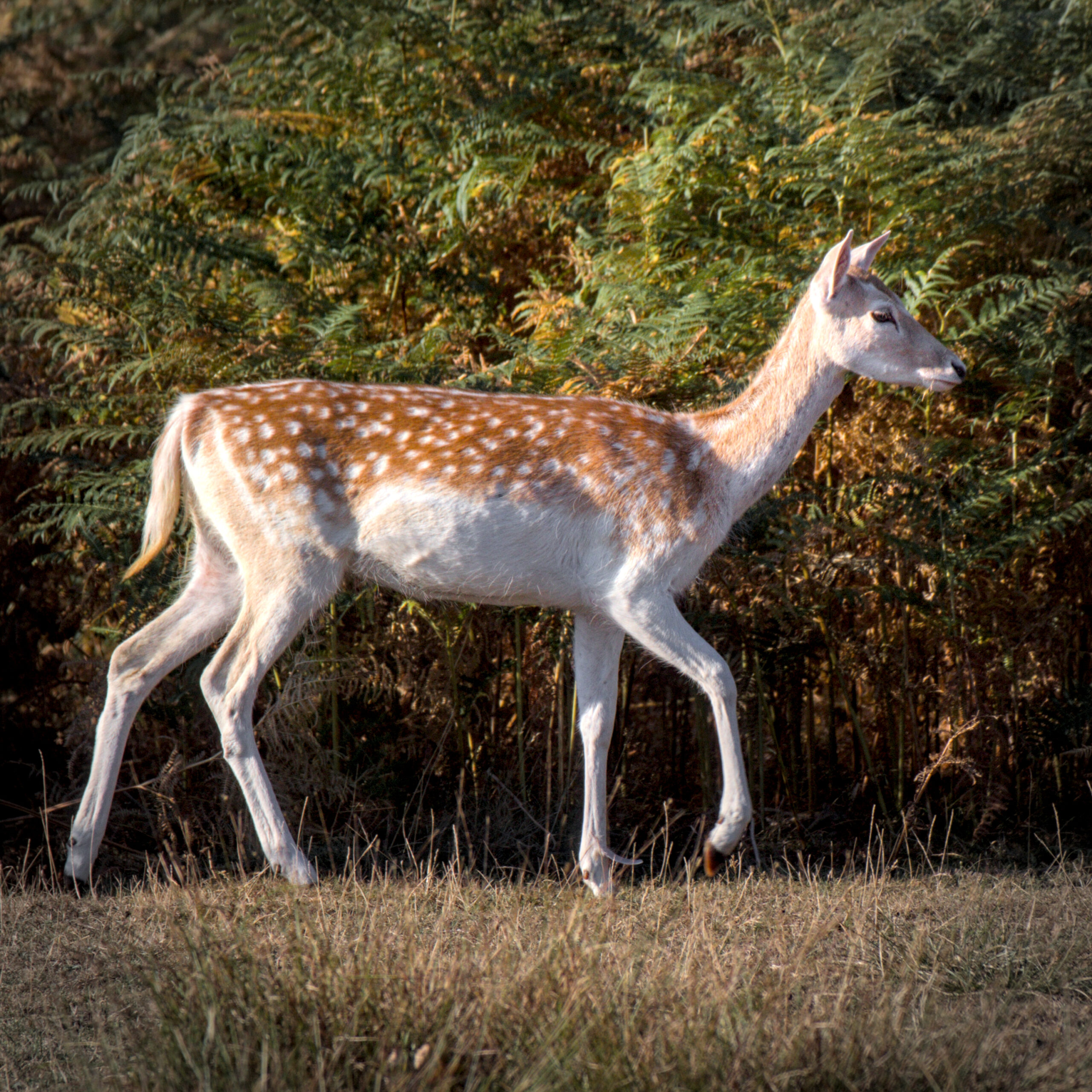
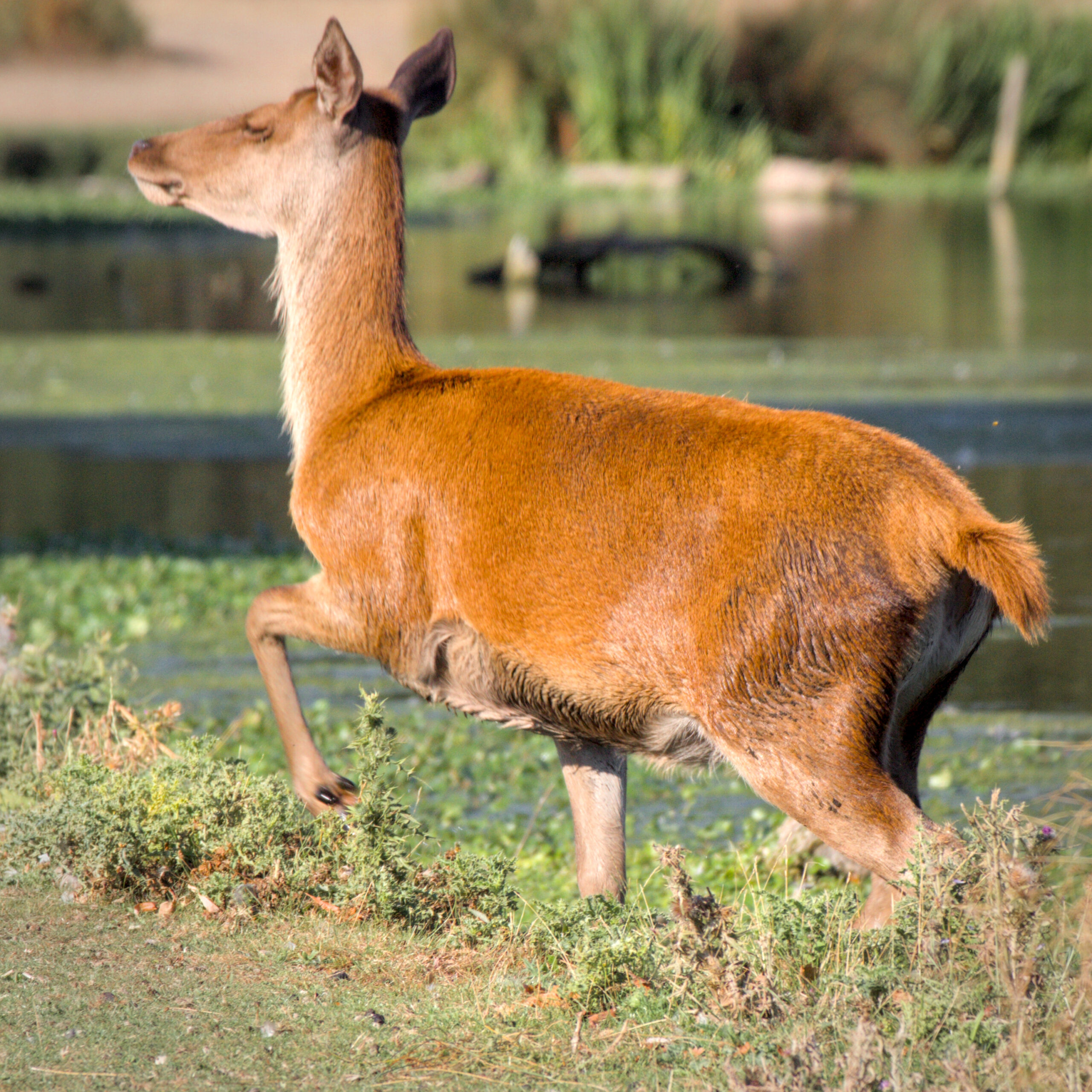
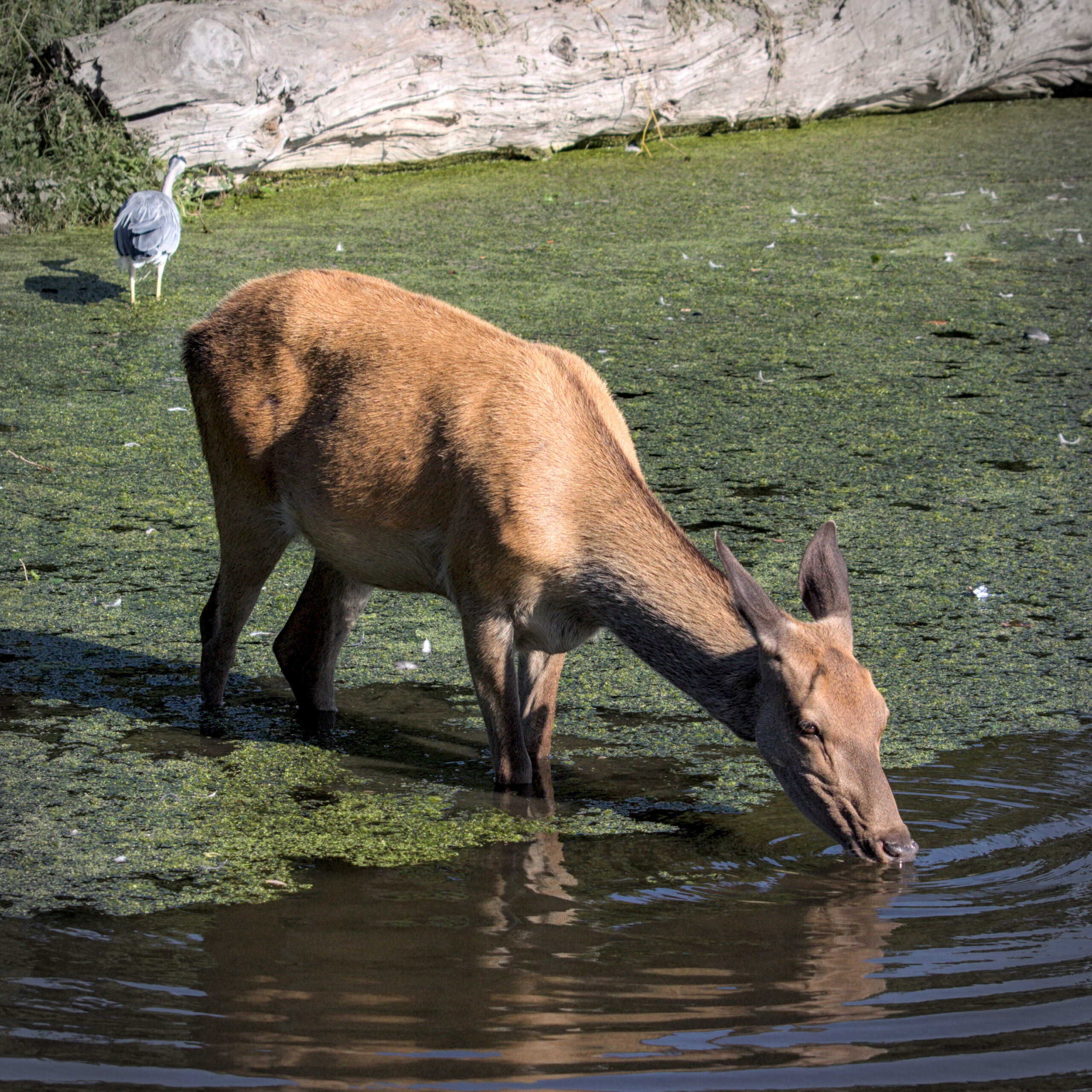
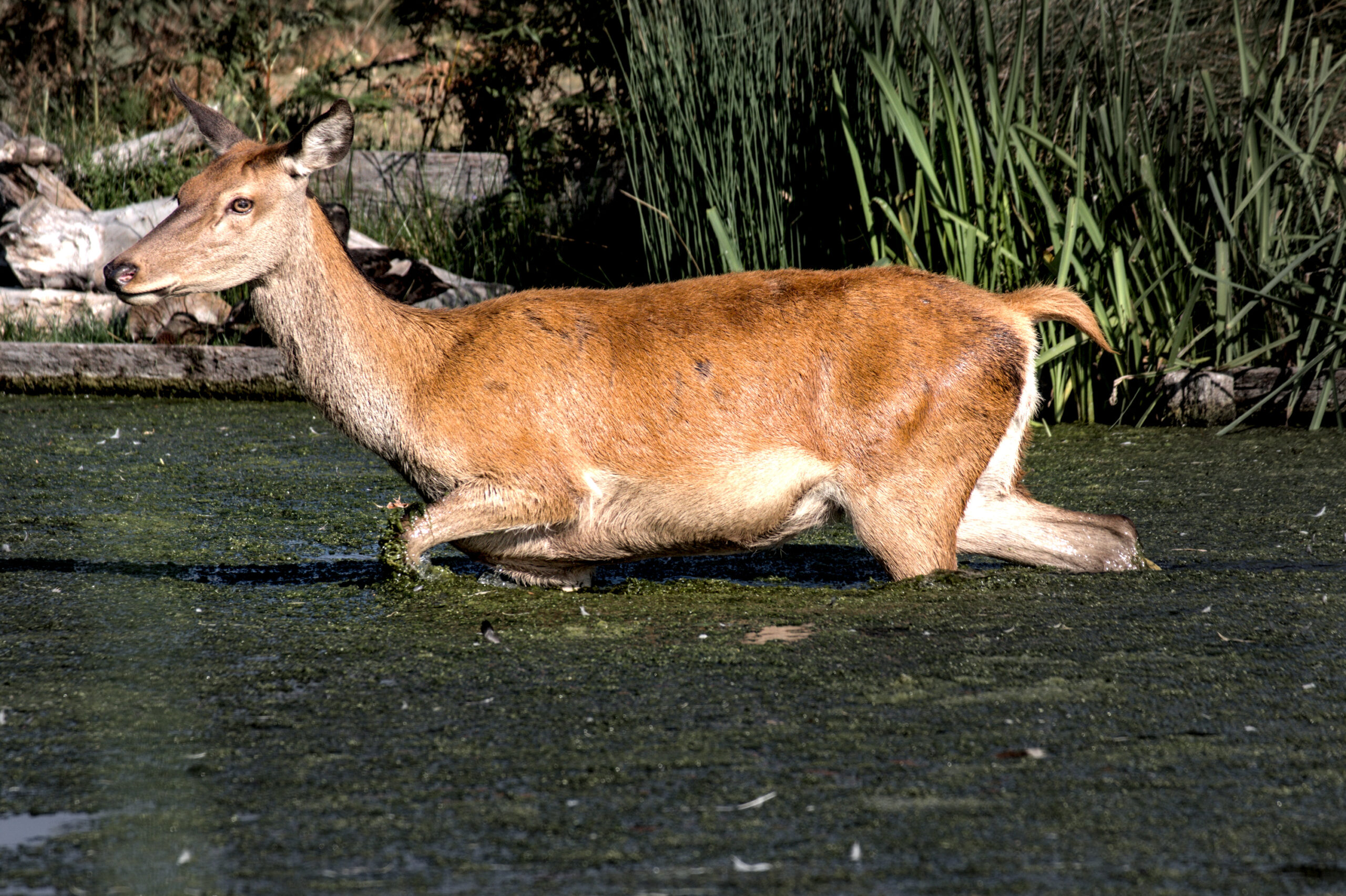
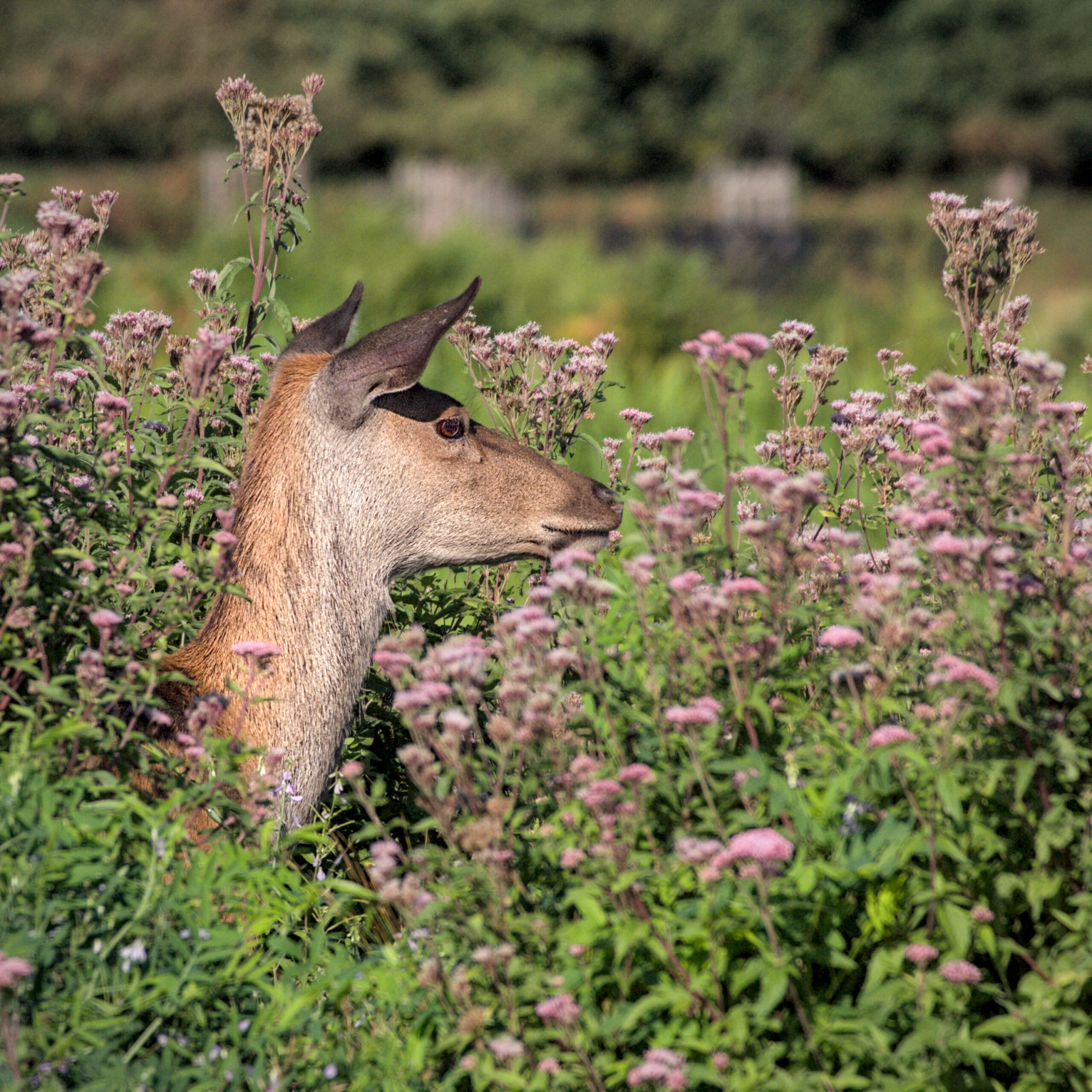
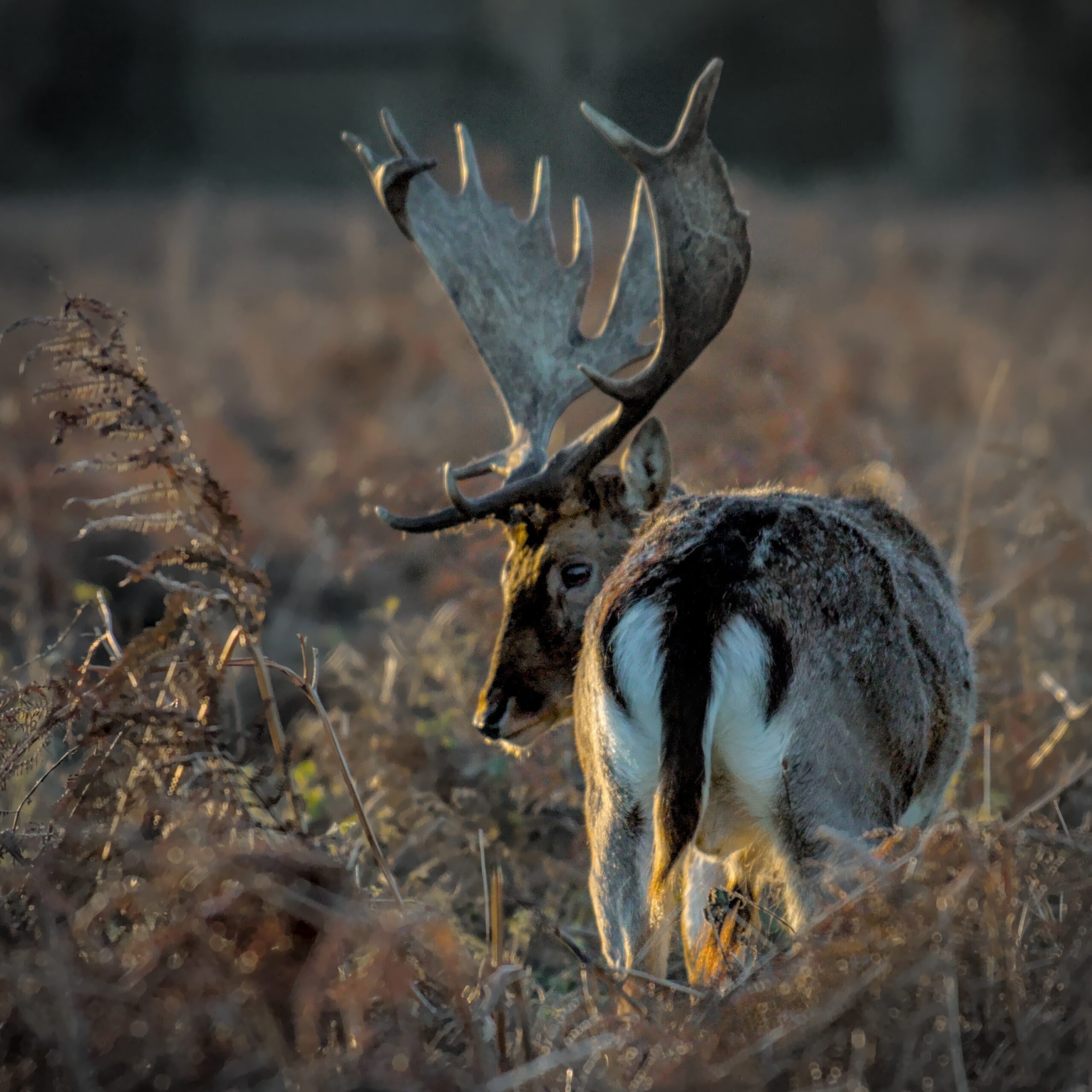
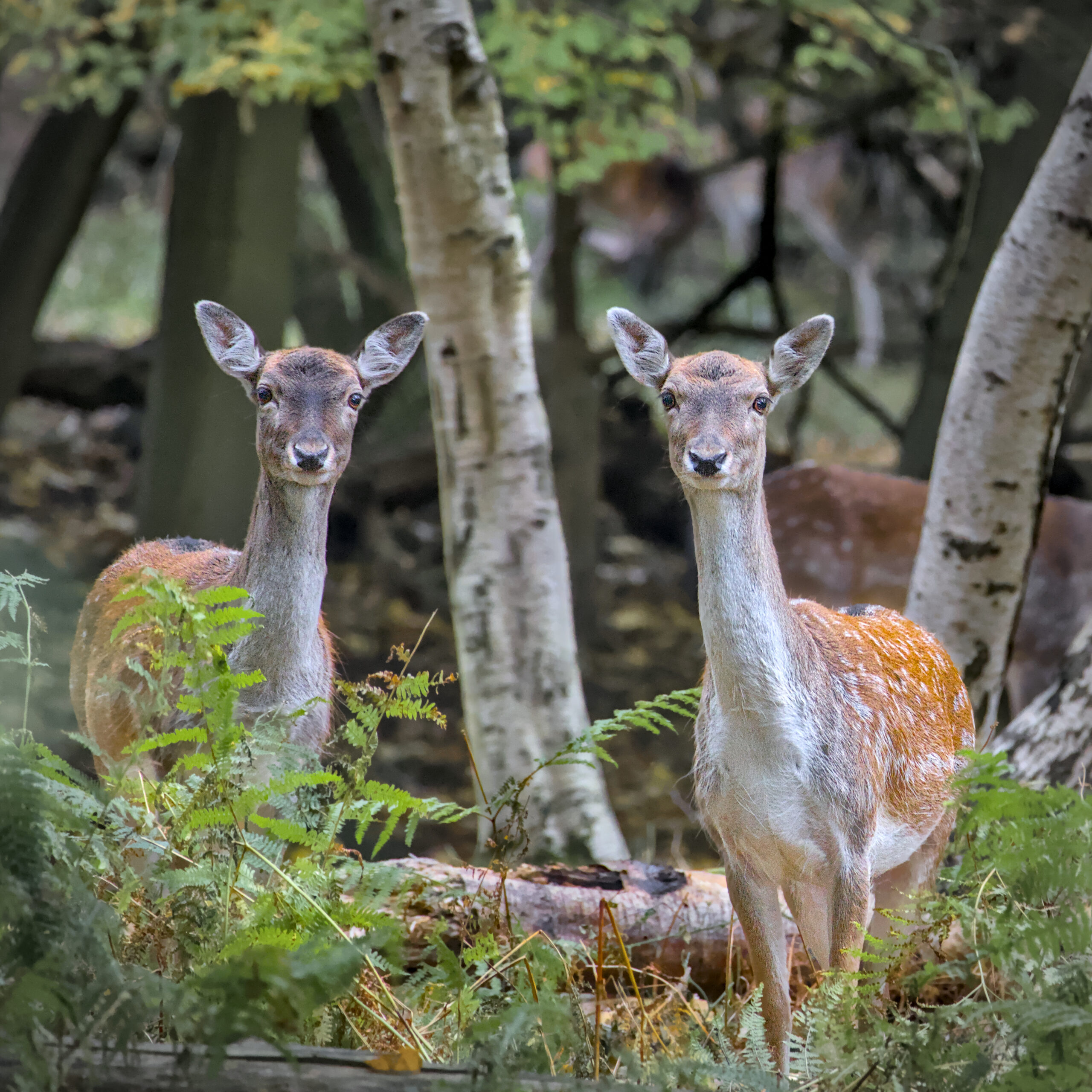
Image 1 — Muntjac Portrait in Black & White, Phyllis Currie
Reeves’ Muntjac — Muntiacus reevesi
The most intimate image in the gallery and the one I wanted to lead with — a muntjac face peering directly through a tangle of wet leaves and bramble stems, converted to black and white to give it a haunting, almost otherworldly quality. The large preorbital glands, the whiskers, the huge dark eyes — everything that makes the muntjac such a fascinating and oddly endearing animal is here in extraordinary close-up detail. The raindrops on the leaves add texture and atmosphere. This is the image that rewards the patience of waiting quietly at Phyllis Currie.
- Scientific name: Muntiacus reevesi
- Common name: Reeves’ Muntjac / Barking Deer
- Origin: Native to China; introduced to Woburn Abbey around 1900, now widespread across England
- Size: Britain’s smallest deer species; shoulder height 44–52cm; weight 10–18kg
- Notable features: Large preorbital scent glands below the eyes used for territory marking; characteristic dark facial stripes; permanently hunched posture due to spine structure
- Location: Phyllis Currie Nature Reserve, Essex
Image 2 — Muntjac in the Undergrowth, Phyllis Currie
Reeves’ Muntjac — Muntiacus reevesi
A muntjac doe peering through the tangle of grass stems and nettles at Phyllis Currie — perfectly illustrating why these small deer are so often heard before they are seen. The warm rufous-brown coat blends beautifully with the dappled woodland edge light. Muntjac are remarkably secretive for an animal that has become so widespread, and spotting one standing still long enough to photograph is always a small triumph.
- Scientific name: Muntiacus reevesi
- Common name: Reeves’ Muntjac
- Habitat: Dense woodland, scrub, overgrown hedgerows, woodland edges — prefers thick cover
- Diet: Browsers rather than grazers — leaves, shoots, bramble, ivy, fungi, fruit
- Call: A loud, dog-like bark repeated persistently — hence the nickname Barking Deer
- UK Status: Non-native but now very common across much of England; expanding range northward
- Location: Phyllis Currie Nature Reserve, Essex
Image 3 — Muntjac Doe by Tree, Phyllis Currie
Reeves’ Muntjac — Muntiacus reevesi
A doe caught in beautiful warm light, standing beside a mossy tree trunk at Phyllis Currie. The characteristic facial markings are clearly visible here — the dark stripes running up the face, the large preorbital glands below the eyes, and the slightly hunched posture that gives muntjac their distinctive silhouette. They are truly extraordinary little deer once you stop to look at them properly, and Phyllis Currie’s quiet woodland edge is exactly the right place to do so.
- Scientific name: Muntiacus reevesi
- Common name: Reeves’ Muntjac
- Breeding: Unique among British deer in having no fixed breeding season — does can conceive again within days of giving birth, meaning fawns can be born in any month of the year
- Tusks: Bucks carry small elongated upper canines used in fights — one of several features that betray the muntjac’s ancient evolutionary origins
- Location: Phyllis Currie Nature Reserve, Essex
Image 4 — Fallow Doe in Woodland, Phyllis Currie
Fallow Deer — Dama dama (doe)
A pale fallow doe standing alert in the dim woodland interior at Phyllis Currie, caught in that characteristic freeze-and-stare posture that gives you just enough time to raise the camera before they melt back into the trees. The menil colour form — pale fawn with white spots retained into adulthood — is one of several colour variants seen in fallow deer, ranging from almost black through to near-white. The dark woodland behind her and the single shaft of light catching her coat make this a quietly atmospheric shot.
- Scientific name: Dama dama
- Common name: Fallow Deer
- Origin: Native to the Mediterranean; introduced to Britain by the Normans around the 11th century
- Size: Shoulder height 85–95cm; weight 40–70kg (bucks considerably larger)
- Colour forms: Four main variants — common (fawn with spots), menil (paler, spots retained), melanistic (very dark), and leucistic (near-white); all four can occur within the same herd
- UK Status: Non-native but long established; most numerous and widespread deer in Britain
- Location: Phyllis Currie, Essex
Image 5 — Two Fallow Does in Autumn Woodland, Phyllis Currie
Fallow Deer — Dama dama (does)
Two fallow does caught peering through the tangle of bare autumn branches, the bright yellow foliage behind them creating a stunning natural backdrop. The spotted flanks and large ears are beautifully visible, and the slightly different colouration between the two individuals illustrates how variable fallow deer can be even within the same herd. The eye contact from the nearer doe gives this real intimacy — that classic moment of mutual assessment that every deer photographer knows well.
- Scientific name: Dama dama
- Common name: Fallow Deer
- Social behaviour: Fallow deer are gregarious — does and young live in groups, while bucks form separate bachelor groups outside the rut
- Habitat: Deciduous and mixed woodland with open glades; parkland; woodland edges — Weald Country Park is ideal habitat
- Location: Phyllis Currie, Essex
Image 6 — Fallow Buck in Autumn Fern, Weald Country Park
Fallow Deer — Dama dama (young buck)
A lovely autumn scene — a young fallow buck standing in bracken at the height of its copper glory, the remnants of summer spotting still visible on the flanks and the antlers just beginning to show their characteristic palmate shape. The autumn colours and the deer’s own warm tones make this a particularly harmonious image. This would have been taken just before or during the rut, when bucks are at their most active and visible — and considerably more reckless than at other times of year.
- Scientific name: Dama dama
- Common name: Fallow Deer (buck)
- Antlers: Only bucks carry antlers; the distinctive palmate (flattened, hand-shaped) form is unique among British deer and fully developed by August–September ready for the October rut
- Rut: October–November; bucks establish leks, groan loudly and compete for does in dramatic displays
- Location: Weald Country Park, Essex
Image 7 — Fallow Herd Under Ancient Oaks, Weald Country Park
Fallow Deer — Dama dama
One of my favourite images in the set — a mixed herd of fallow deer sheltering in the shade of ancient oaks at Weald Country Park, the autumn leaf litter carpeting the ground beneath them. What I love about this shot is the colour variation visible across the group — spotted summer coats, darker winter pelage, and at least one paler menil individual — a reminder of just how variable fallow deer can be. The massive oak canopy framing the scene gives it a timeless, almost painterly quality. These trees and these deer have coexisted in English parkland for centuries.
- Scientific name: Dama dama
- Common name: Fallow Deer
- Herd structure: Mixed herds of does, fawns and young bucks are typical outside the rut; mature bucks rejoin the herd only during October–November
- Historical note: Fallow deer have been a feature of English parkland since Norman times — many of the ancient deer parks established in the 11th and 12th centuries still support herds today
- Trees: The oaks here are likely Pedunculate Oak — Quercus robur — the dominant parkland oak of lowland England
- Location: Weald Country Park, Essex
Image 8 — Fallow Buck Grazing, Weald Country Park
Fallow Deer — Dama dama (buck)
A mature fallow buck grazing in dappled woodland shade — head down, palmated antlers clearly visible as he forages in the leaf litter. The antlers are beautifully developed here, confirming this as a mature individual, and the dappled light through the woodland canopy creates attractive natural lighting. Bucks in this posture — absorbed in feeding — can occasionally be approached more closely than alert deer, though patience and slow movement are always essential.
- Scientific name: Dama dama
- Common name: Fallow Deer (buck)
- Diet: Primarily grazers — grasses and herbs — but will also browse leaves, bark and mast (acorns, beechmast) in autumn, which provides important fat reserves before winter
- Antler note: Fallow buck antlers are shed each spring and fully regrown by August — the annual cycle of growth, hardening, rutting and shedding is one of nature’s more remarkable feats
- Location: Weald Country Park, Essex
Image 9 — Fallow Buck Running, Weald Country Park
Fallow Deer — Dama dama (buck in winter coat)
A superb action shot — a fallow buck in full flight across open ground, the small spike antlers suggesting either a young buck or one in early antler regrowth. The dark, almost melanistic winter coat is striking and quite different from the spotted summer pelage most people associate with fallow deer. This is exactly the moment described in my intro — the split second between the deer deciding you are a threat and disappearing into the treeline. Capturing it sharp and well-framed takes real timing.
- Scientific name: Dama dama
- Common name: Fallow Deer
- Speed: Fallow deer can reach speeds of around 30mph when alarmed; they are also capable jumpers, clearing obstacles of 1.5m with ease
- Winter coat: Fallow deer moult twice yearly — the dark, less spotted winter coat is replaced by the familiar spotted summer pelage in spring
- Location: Weald Country Park, Essex
Image 10 — Red Deer Hind, Bushy Park
Red Deer — Cervus elaphus (hind)
Britain’s largest native land mammal, and one that never fails to impress up close. This hind at Bushy Park is caught in characteristic alert posture — head raised, ears forward, taking stock of the situation. The rich auburn coat, pale muzzle and large rounded ears are all clearly visible. Behind her, more deer can be made out in the dappled shade — a reminder that red deer at Bushy Park exist in a managed herd in an extraordinary urban context, just a few miles from central London.
- Scientific name: Cervus elaphus
- Common name: Red Deer
- Size: Shoulder height 107–137cm; weight 90–190kg (stags considerably larger than hinds) — Britain’s largest native land mammal
- UK Status: Native; strongholds in Scotland, Exmoor and the Lake District; managed herds in several English parks including Bushy Park and Richmond Park
- Bushy Park: The deer herd at Bushy Park has existed since the park was enclosed by Henry VIII in the 16th century — making it one of the longest continuously managed deer herds in England
- Location: Bushy Park, London
Image 11 — Red Deer Mother and Calf, Bushy Park
Red Deer — Cervus elaphus
One of the most touching images in the gallery — a red deer hind standing protectively alongside her young calf, both looking directly into the camera. The size difference is striking; red deer calves are born relatively large but still look impossibly delicate beside their mothers. The spotted coat of the calf — spots are lost as the animal matures — and the perfectly composed double portrait make this a very special shot. I titled this one “Mother and Child” and I think it earns that name completely.
- Scientific name: Cervus elaphus
- Common name: Red Deer
- Calves: Born May–June; the spotted coat provides camouflage in dappled woodland light and fades through the first year
- Maternal bond: Hinds are highly attentive mothers — calves are hidden in vegetation for the first weeks of life and visited regularly by the hind to suckle; red deer should always be approached with particular care when calves are present
- Location: Bushy Park, London
Image 12 — Pale Fallow Doe Walking, Weald Country Park
Fallow Deer — Dama dama (menil/leucistic doe)
A beautifully pale individual — this fallow doe shows the menil or near-leucistic colour form, with white spots dramatically pronounced against the pale cream coat. Fallow deer are the most colour-variable of all British deer species, and this individual is a particularly striking example of how far from the typical fawn-and-spots pattern they can stray. The late afternoon light catching the coat gives this an almost luminous quality.
- Scientific name: Dama dama
- Common name: Fallow Deer
- Colour note: The pale menil form is caused by reduced melanin production; unlike true albinism the eyes remain normally pigmented. White or near-white fallow deer are locally common in some herds where the gene has become established through generations of breeding within a closed population
- Location: Weald Country Park, Essex
Image 13 — Red Deer Hind Running at Water’s Edge, Bushy Park
Red Deer — Cervus elaphus (hind)
A dynamic shot — a red deer hind caught mid-stride along the water’s edge at Bushy Park, the lake visible behind her and the thistle-strewn bank giving a sense of the varied habitat within the park. The composed, almost serene expression despite being clearly in motion is characteristic of red deer — they have a natural dignity even at speed. A grey heron can be spotted in the background, completely unperturbed by the whole business.
- Scientific name: Cervus elaphus
- Common name: Red Deer
- Speed: Red deer can run at up to 40mph over short distances
- Notable detail: The grey heron (Ardea cinerea) standing sentinel in the background is a lovely incidental detail — Bushy Park’s ponds and water features support a wide range of wildlife alongside the deer herd
- Location: Bushy Park, London
Image 14 — Red Deer Hind Drinking, Bushy Park
Red Deer — Cervus elaphus (hind)
A beautifully composed behavioural shot — a red deer hind wading into the shallows to drink, head lowered to the duckweed-covered water, the reflection of her muzzle just visible on the surface. A grey heron stands sentinel in the background once again, and a large weathered log frames the upper edge of the image. Water sources are excellent places to wait quietly for deer photography opportunities, and the intimacy of catching a large, normally wary animal in a moment of quiet vulnerability is what makes this image work.
- Scientific name: Cervus elaphus
- Common name: Red Deer
- Behaviour: Red deer drink daily when possible, typically at dawn and dusk; stags also wallow in muddy pools during the rut, coating themselves in mud to appear more imposing to rivals
- Location: Bushy Park, London
Image 15 — Red Deer Hind Wading, Bushy Park
Red Deer — Cervus elaphus (hind)
One of the most dramatic images in the gallery — a red deer hind wading purposefully through the duckweed-covered pond at Bushy Park, legs pushing through the water, reeds rising behind her. The warm auburn coat, the determined expression, and the spray of water around her legs all combine to give this real energy and movement. Red deer are strong swimmers and have no hesitation entering water — at Bushy Park the ponds are a regular part of the herd’s daily routine, particularly in warm weather.
- Scientific name: Cervus elaphus
- Common name: Red Deer
- Swimming: Red deer are capable swimmers and will readily cross rivers and lakes — on Scottish islands they are known to swim between islands to access new grazing
- Habitat at Bushy Park: The park’s ponds and wetland margins provide drinking water, cooling opportunities and aquatic vegetation — an important resource for the herd year-round
- Location: Bushy Park, London
Image 16 — Red Deer Hind Among Hemp Agrimony, Bushy Park
Red Deer — Cervus elaphus (hind)
A red deer hind raising her head above a sea of pink hemp agrimony flowers, the late summer colour creating a gorgeous natural frame. The juxtaposition of the large, warm-eyed deer and the delicate wildflowers is quite beautiful, and the soft background light completes the picture perfectly. Hemp agrimony is an important late-season nectar plant, so this image captures two aspects of Bushy Park’s wildlife value in a single frame — the grazing mammals and the flowering plants that support the wider invertebrate community.
- Scientific name: Cervus elaphus
- Common name: Red Deer
- Plant: Hemp Agrimony — Eupatorium cannabinum; a tall native wildflower of damp open habitats; flowers July–September; highly attractive to late-season pollinators including butterflies and hoverflies
- Location: Bushy Park, London
Image 17 — Fallow Buck at Dawn, Bushy Park
Fallow Deer — Dama dama (mature buck)
A mature fallow buck caught in extraordinary golden backlight at dawn, the massive palmated antlers rimmed with light against the dark bracken background. The dark melanistic coat, the white rump patch, and the sheer scale of the antlers all speak to a prime mature buck at the height of his powers. This would have been taken during or just before the rut — bucks at this time of year are at their most impressive and most approachable, too focused on the business of reproduction to pay much attention to a photographer in the bracken.
- Scientific name: Dama dama
- Common name: Fallow Deer (buck)
- Antlers: The fully palmated antlers of a mature fallow buck are among the most impressive of any British deer — the palmate (flattened) blade is unique to fallow among our six deer species and can span 70cm or more in a large individual
- Rut behaviour: During the October rut, fallow bucks establish traditional rutting stands — specific locations returned to year after year — where they groan, thrash vegetation and fight rival bucks for the right to mate
- Melanistic form: The very dark coat visible here is the melanistic colour variant — caused by excess melanin production; these individuals are locally common in some Weald Country Park herds
- Location: Bushy Park, London
Image 18 — Three Fallow Does in Winter Scrub, Phyllis Currie
Fallow Deer — Dama dama (does)
Three fallow does standing alert in the winter scrub at Phyllis Currie — caught in that characteristic group freeze, assessing the situation before deciding whether to bolt. The central doe is looking directly into the camera while her companions glance sideways, a third just visible at the right edge of the frame. The winter coat has lost much of the summer spotting, giving them a darker, plainer appearance than the animals photographed at Weald. Fallow deer passing through Phyllis Currie feel considerably wilder than the more settled Weald population — less predictable, harder to approach, and gone in an instant.
- Scientific name: Dama dama
- Common name: Fallow Deer
- Winter coat: Fallow deer moult in spring and autumn — the winter coat is darker and less spotted than the summer pelage, providing better camouflage in bare woodland
- Vigilance: Deer in a group share the burden of predator detection — at least one animal is almost always alert while others feed; it only takes one to spook for the whole group to flee
- Location: Phyllis Currie Nature Reserve, Essex
Image 19 — Two Fallow Does Facing Camera, Weald Country Park
(Featured Image)
Fallow Deer — Dama dama (does)
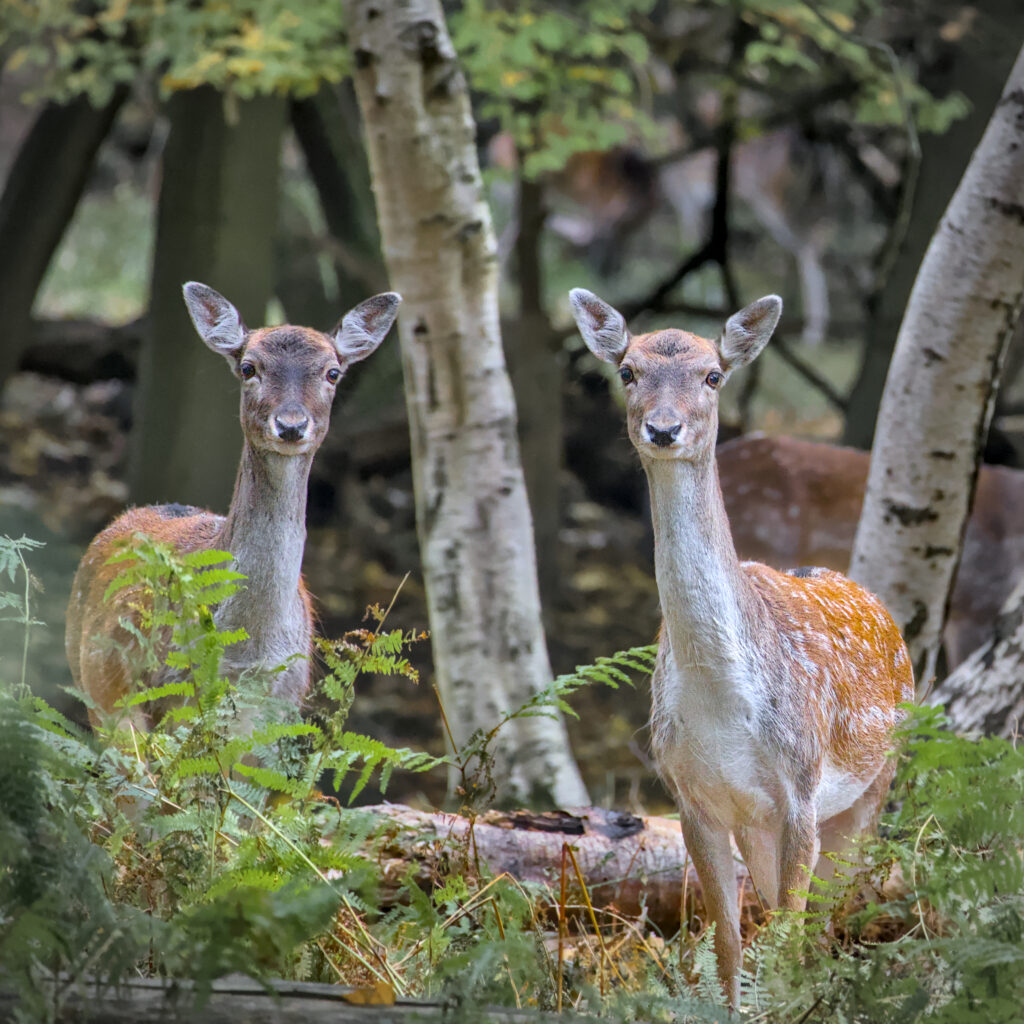
The image I chose as the cover for this gallery — and I think it earns that place. Two fallow does standing side by side in open woodland at Weald Country Park, both looking directly into the camera with that wide-eyed, large-eared alertness that makes deer so endlessly photogenic. The silver birch trunks, fallen log and bracken give it a classic English woodland feel, and the hint of a third deer deep in the background adds depth. Getting two animals simultaneously sharp, well-framed and looking straight at you is one of those moments that makes the patience of deer photography completely worthwhile.
- Scientific name: Dama dama
- Common name: Fallow Deer
- Social note: Does are highly social and form close-knit groups; the bond between related females in a fallow herd can persist for many years — the two individuals here may well be mother and daughter or sisters
- Location: Weald Country Park, Essex